

Science education has always depended on more than the ability to remember facts. Students need a strong foundation of knowledge, but they also need opportunities to see how that knowledge relates to the world around them. A geological era can be explained through a textbook, the properties of minerals can be studied in a lesson, and biological adaptation can be illustrated through diagrams and photographs. Yet encountering a real specimen often adds another dimension to that understanding.
This is one of the ideas behind experiential learning in science. It does not replace academic instruction, textbooks or the expertise of educators. Rather, it creates opportunities for students to use what they have learned while observing, investigating and making connections for themselves.
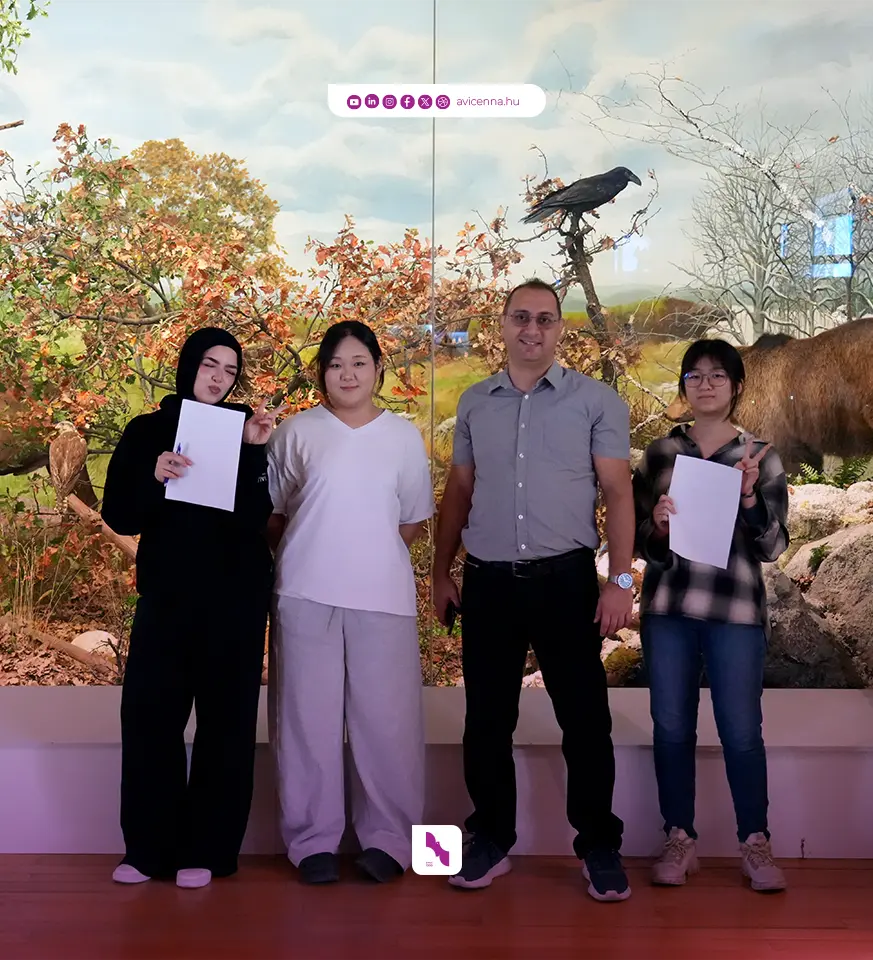
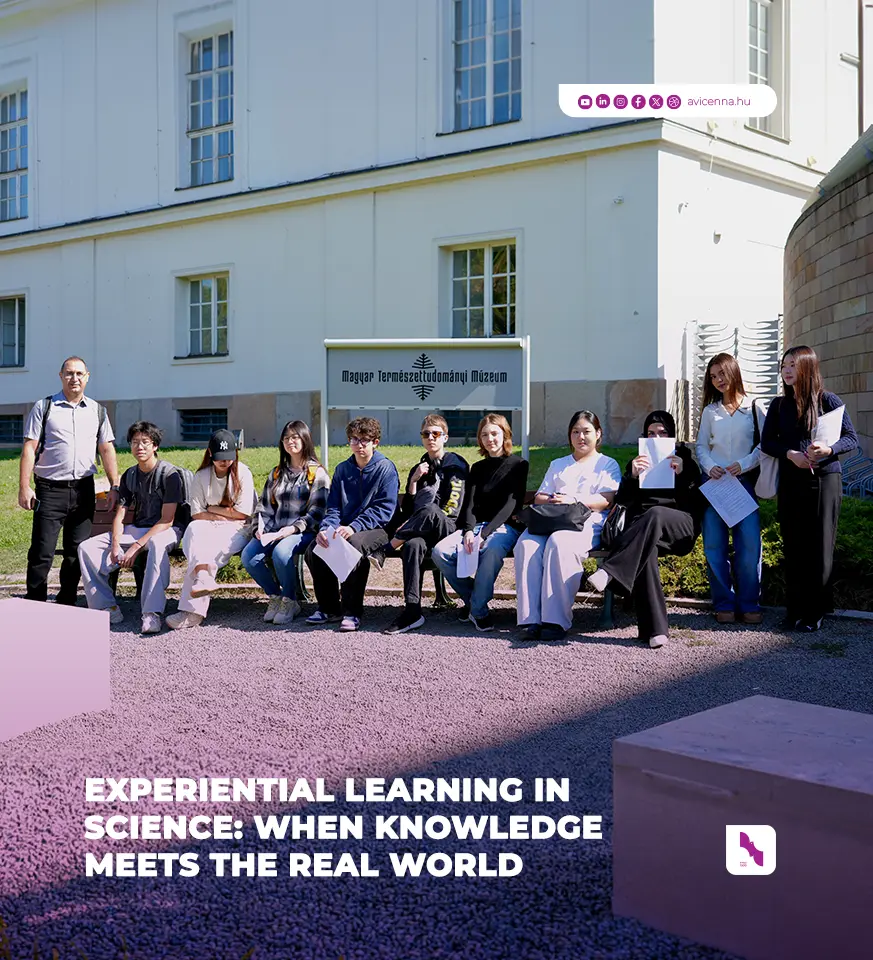
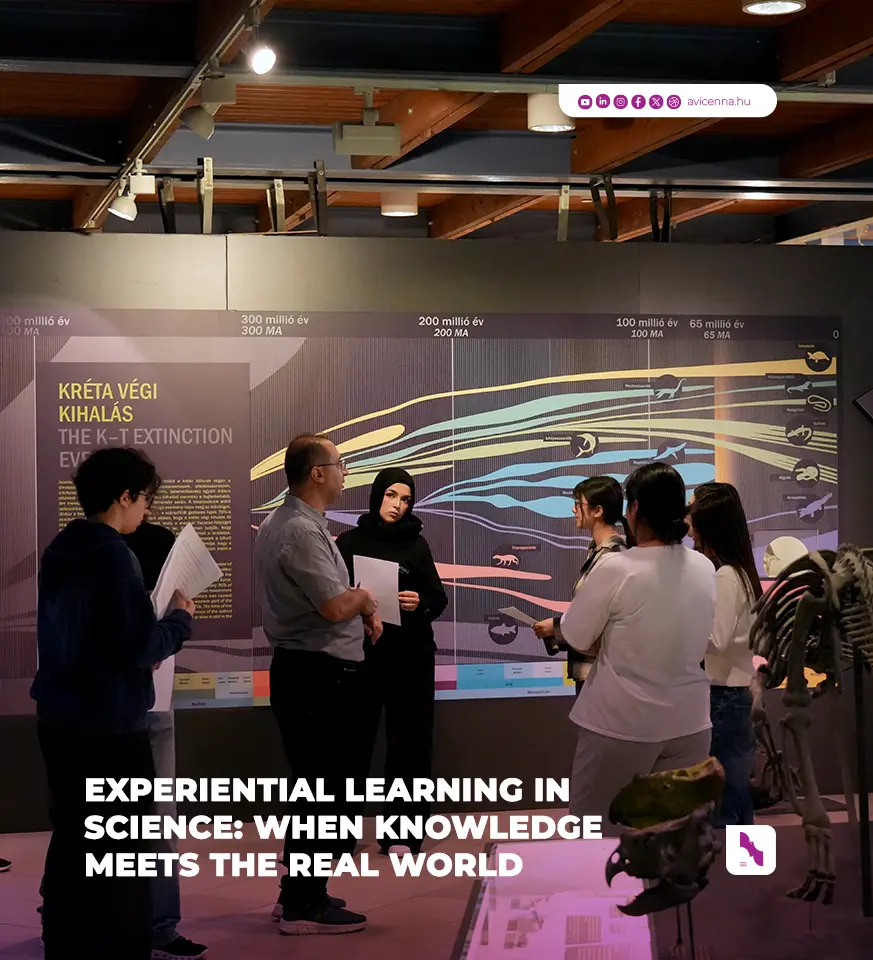
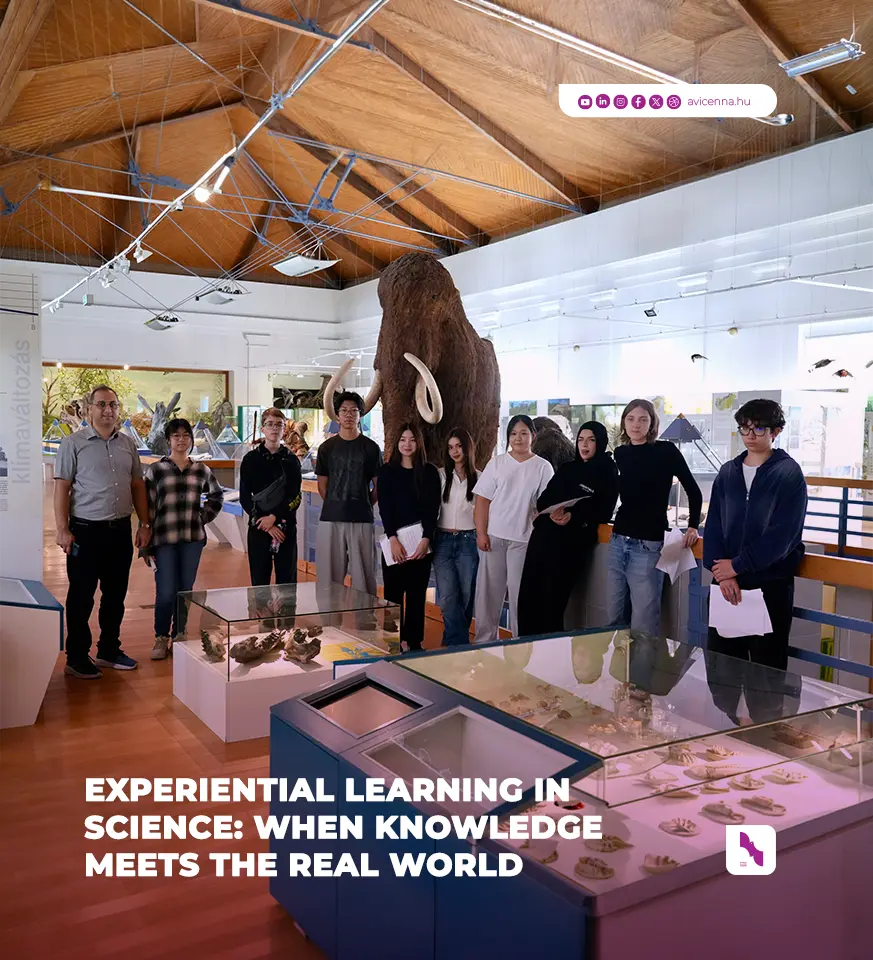
A recent Natural Sciences activity involving Grade 11 students at Avicenna International College (AIC) provides a practical example. During a visit to the Hungarian Natural History Museum in Budapest, students did much more than walk through the exhibitions. Their mentor, Mr. Harout Parseghian, had designed the visit as a scientific treasure hunt connected to topics they were already studying.
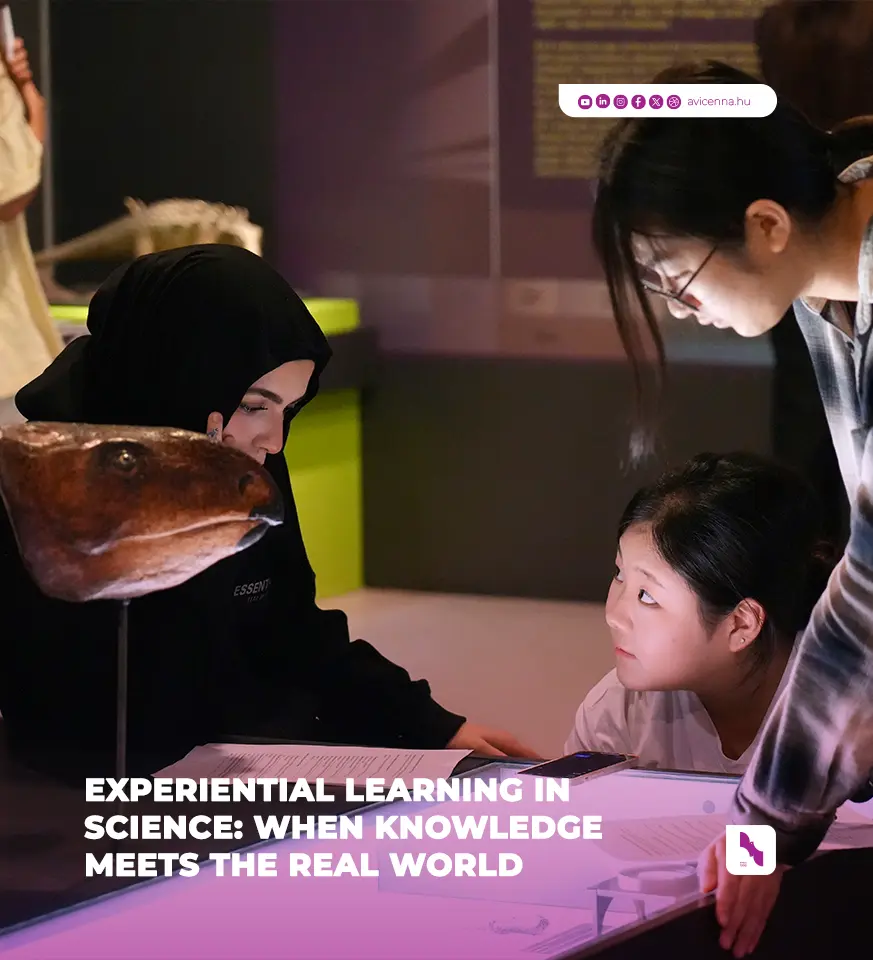
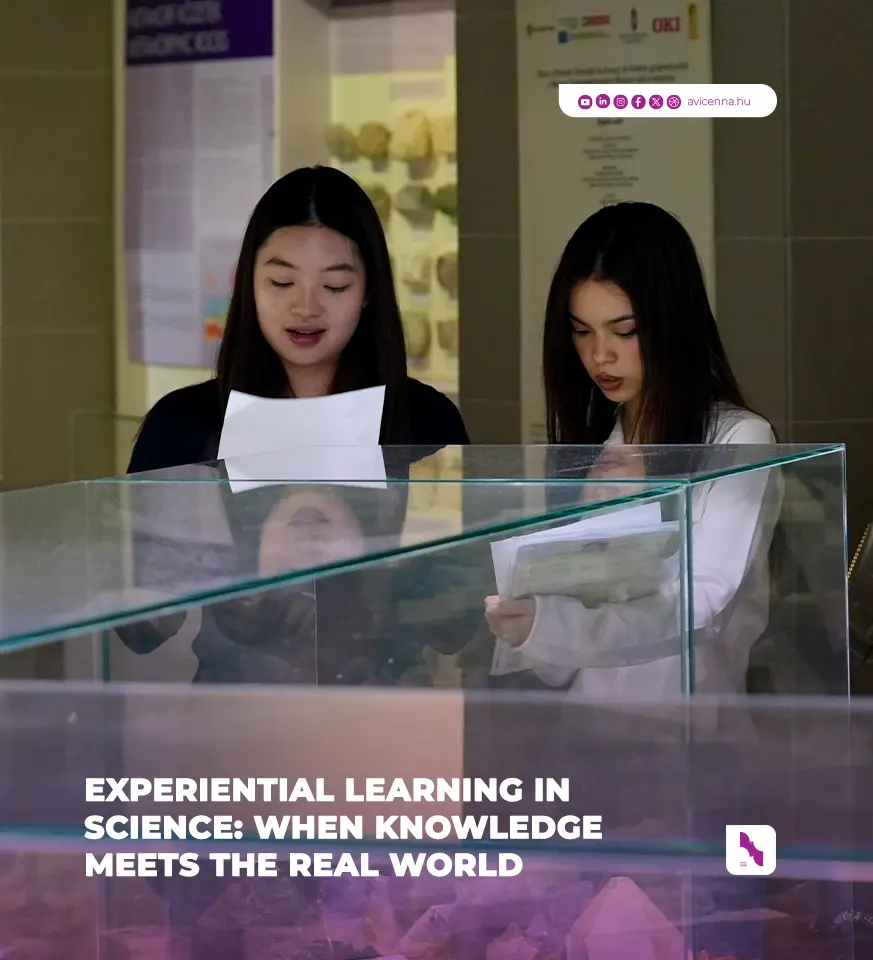
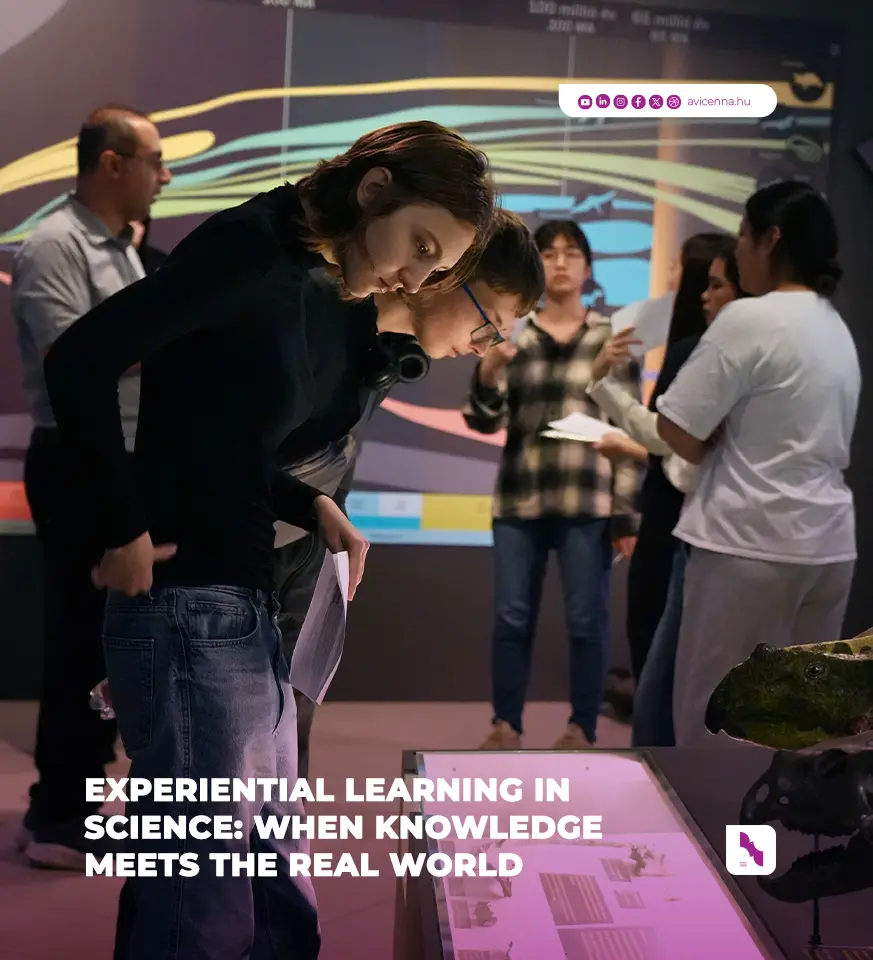
Armed with clue sheets, students had to navigate the collections, identify particular specimens and relate their observations to their existing scientific knowledge. In this way, the museum visit became part of the learning process rather than simply an activity taking place outside the College.
What Makes an Experience Educational?
Experiential learning is sometimes described too loosely. Taking students to a museum, laboratory or field location does not automatically make an activity educationally meaningful. The value comes from what students are expected to do with the experience.
A well designed experiential activity begins with a learning purpose. Students might be asked to investigate a question, identify evidence, compare examples or apply something they have previously studied. The experience then gives them a context in which academic knowledge can be tested against observation.
This was an important feature of the Grade 11 museum visit. The students were not asked simply to look around and absorb whatever caught their attention. The treasure hunt provided enough structure to connect the museum collections with their Natural Sciences lessons, while still requiring them to search, interpret clues and reach the relevant exhibits themselves.
This balance between structure and student agency is important. Active learning does not mean leaving students without guidance. In many cases, it requires considerable preparation from the educator, who must understand the learning objectives well enough to create an environment in which students can investigate them more independently.
Seeing Geological Time Through Physical Evidence
One part of the treasure hunt took students through an extraordinary span of natural history. Among the specimens they searched for were Precambrian stromatolites, evidence associated with some of the earliest forms of life, as well as the Woolly Mammoth, an animal associated with the much more recent Ice Age.
Geological time can be particularly difficult for students to comprehend because the numbers involved are so far removed from ordinary human experience. Millions or billions of years can easily remain abstract, even when students understand their definitions correctly.
Museum collections offer a different point of reference. Seeing physical evidence from dramatically different periods does not replace the scientific explanation of geological time, but it can help students place that explanation in a more tangible context. The specimen becomes something they can connect with the terminology, timelines and concepts encountered in their lessons.
The educational value therefore lies not simply in seeing something old or unusual. It lies in helping students move between concept and evidence, which is fundamental to scientific thinking.
Exploring Adaptation Through Real Specimens
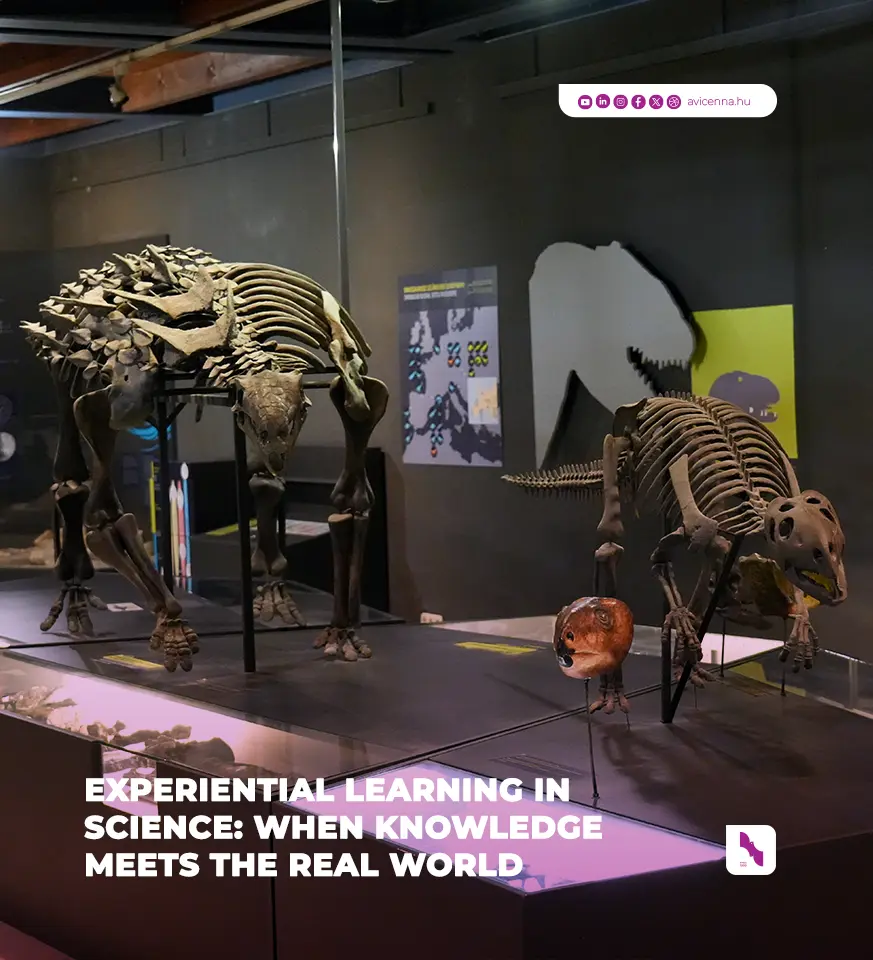
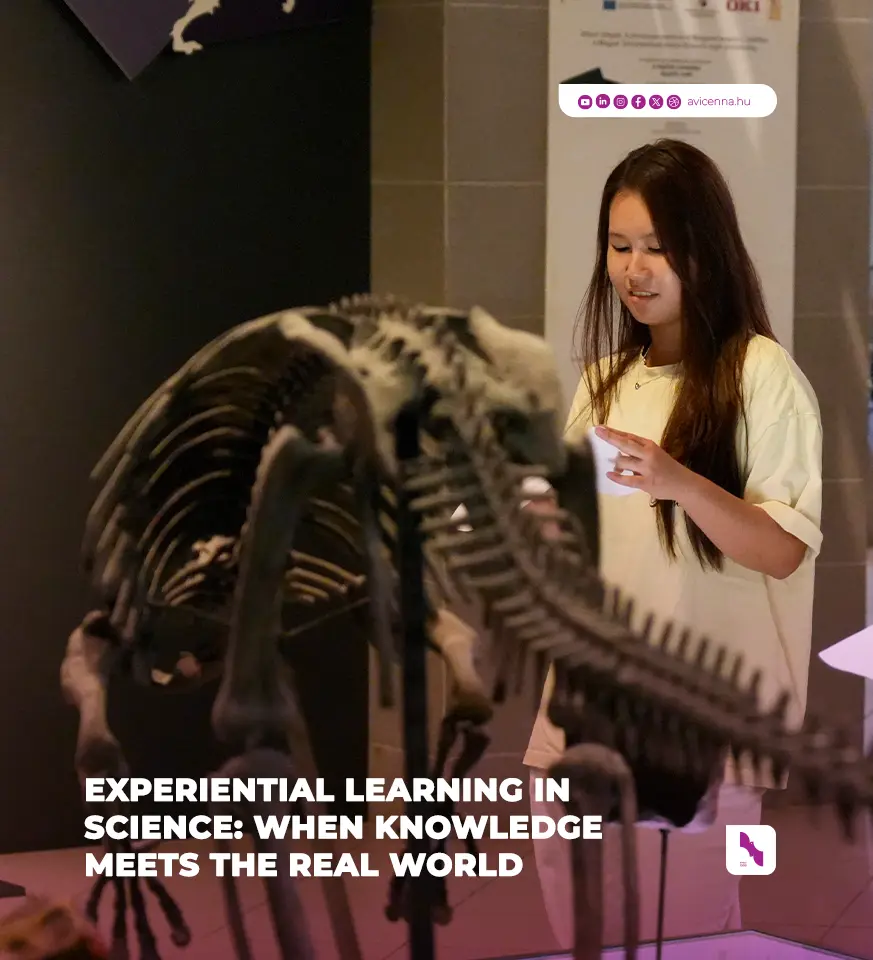
The treasure hunt also directed students towards examples of plant and animal adaptation. They examined defensive structures such as thorns and encountered botanical specimens including the cones of Cedrus libani, the Cedar of Lebanon. Another remarkable example was the Coco de Mer, known for producing the heaviest seed in the world.
In a conventional lesson, these examples might appear as photographs, descriptions or case studies. At the museum, students had to locate and examine them as part of a wider collection. That additional act of searching and observing changes the student’s relationship with the material.
Rather than simply being shown an example of adaptation, students are encouraged to consider why a particular structure exists, what function it serves and how it relates to concepts they already understand. The educator still provides the intellectual framework, but the student becomes more actively involved in making the connection.
This is one of the reasons experiential learning can complement academic instruction so effectively. It gives students another route into the same knowledge.
Connecting Minerals With Everyday Life
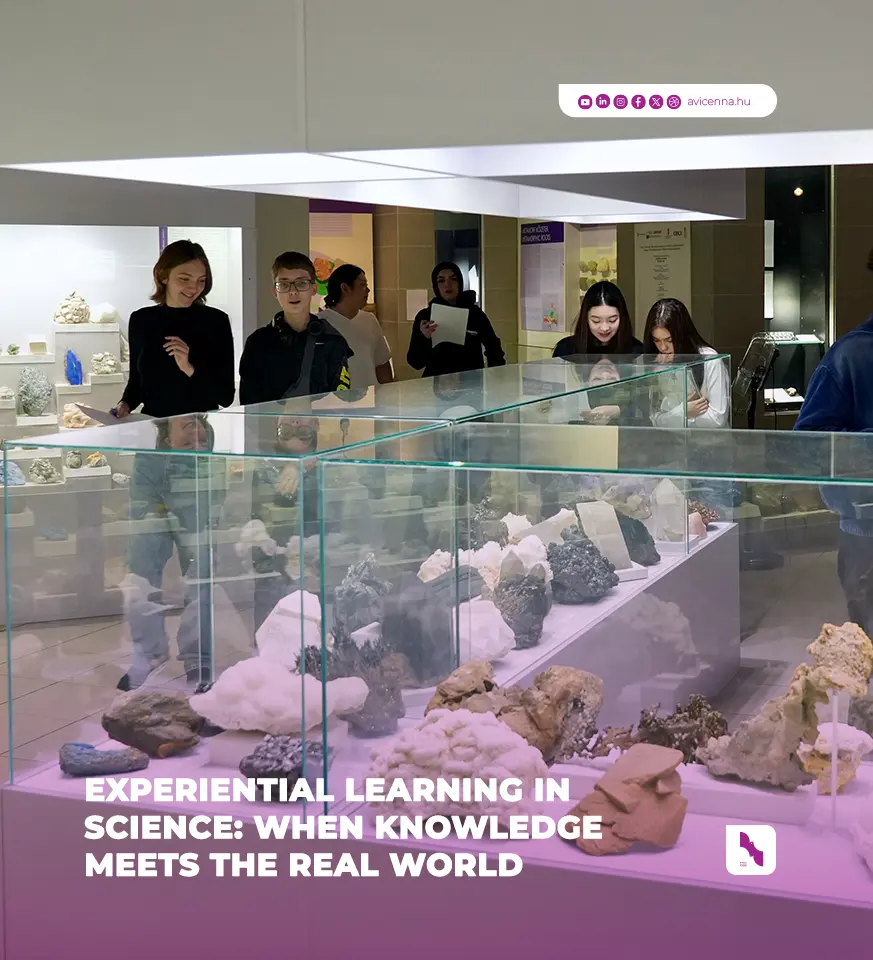
The museum’s mineral collection provided another opportunity to connect scientific concepts with physical examples. Students identified amethyst crystals and revisited the Mohs scale of mineral hardness, while also considering how minerals find their way into products encountered in everyday life, including cosmetics.
Connections of this kind are particularly useful because students can sometimes experience school subjects as separate from the world beyond school. Chemistry belongs to one lesson, biology to another and geology to another. In reality, of course, these disciplines frequently overlap, and their principles are present throughout everyday life.
When students begin to recognise those connections, scientific knowledge becomes less isolated. A mineral is no longer only an item in a display case or a term to remember for an assessment. It becomes part of a larger story about materials, properties, industry, nature and daily life.
Why the Treasure Hunt Format Matters
Towards the end of the museum visit, students were given an additional challenge: to locate the museum’s oldest artifact.
The task itself was simple, but the learning design behind it is worth considering. An educator could provide the answer immediately, and students could record it. Instead, the question creates a reason to investigate.
That distinction illustrates an important aspect of active learning. The objective is not to make every answer difficult to obtain, nor to turn every lesson into a game. It is to recognise that there are moments when the process of finding an answer has educational value of its own.
A well constructed question directs attention. It encourages students to examine information selectively, compare possibilities and decide where to look next. Even a relatively simple treasure hunt can therefore introduce elements of inquiry into an environment that might otherwise be experienced passively.
The Changing Role of the Educator
Activities such as this also help clarify what AIC means when it speaks about mentorship.
The move towards more active learning does not diminish the importance of educators. In fact, designing a successful learning experience requires significant professional judgment. The educator needs to know what students are currently learning, which concepts would benefit from further exploration, what level of challenge is appropriate and how an external environment such as a museum can contribute to those objectives.
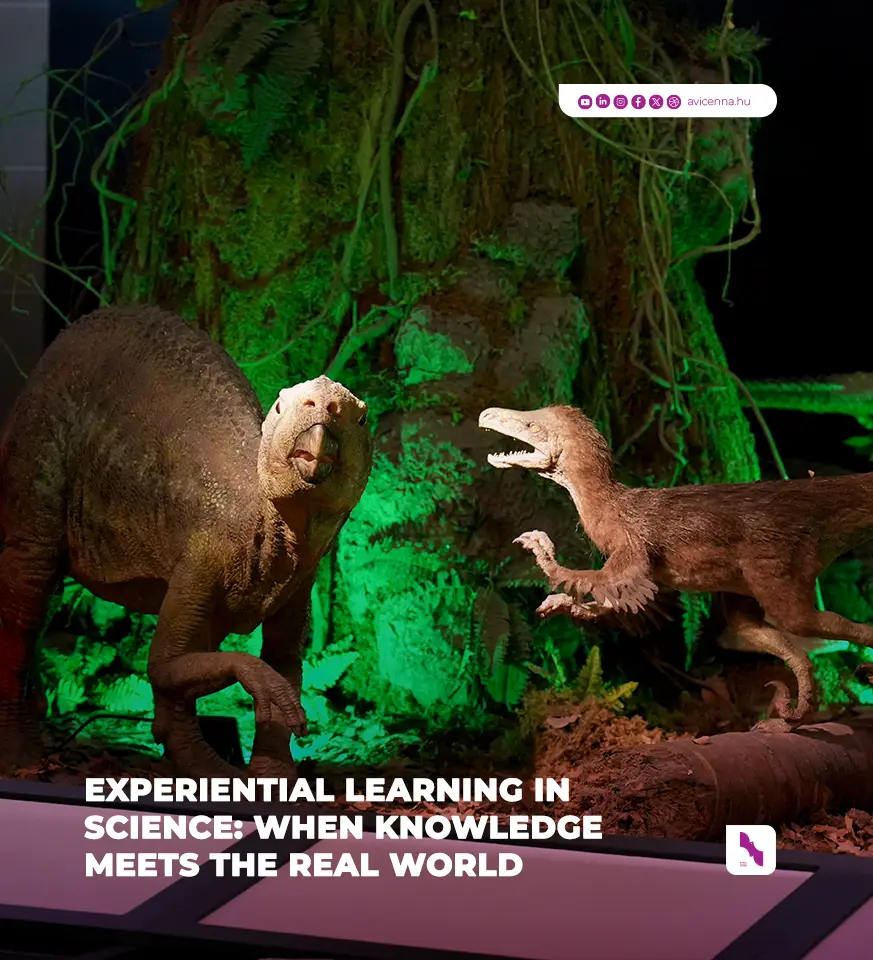
In the Grade 11 activity, the museum contained thousands of possible things to see. The educational design came from selecting particular specimens and questions that connected the collection with the students’ Natural Sciences learning.
The mentor therefore remains central to the process, but not necessarily as the person who provides every answer. At times, the mentor’s most valuable contribution is to design the question, establish the context and create the conditions in which students can discover a connection themselves.
This reflects AIC’s broader educational philosophy, which defines learning as an active process in which the learner should play the central role, supported by mentors who guide development and connect knowledge with real life.
What Does This Mean for Students?
From the student’s perspective, the most important difference is participation.
During an activity like the museum treasure hunt, students are required to do something with their existing knowledge. They need to interpret a clue, identify a relevant specimen, look closely enough to recognise important characteristics and relate what they find to a topic they have previously encountered.
These are modest tasks individually, but together they encourage habits that matter well beyond one museum visit. Students practise observation, interpretation and independent decision making while remaining within a structured academic activity.
Just as importantly, experiences can create reference points that students carry back into later lessons. When geological eras, mineral properties or biological adaptations appear again, the concept may now be associated with something the student has physically encountered.
The objective is not simply to create a memorable day. It is to give academic knowledge more contexts in which it can be understood and recalled.
What Should Parents Expect From Experiential Learning?
For parents, it is reasonable to distinguish between an enjoyable school activity and an educational experience with a clear purpose. Students benefit from both, but they are not the same thing.
When experiential learning is designed well, parents should be able to identify a connection between the activity and what students are learning academically. There should also be some form of intellectual participation rather than passive attendance. Students may be observing, investigating, discussing, solving a problem, creating something or applying knowledge in an unfamiliar context.
The Grade 11 museum visit illustrates this distinction clearly. The value of the visit was not simply that students spent time at an important cultural and scientific institution in Budapest. Its educational value came from connecting that environment with their Natural Sciences learning and giving them specific tasks through which to explore those connections.
This is also why reflection after an experience matters. What students see outside the homeroom becomes more valuable when it can be revisited, discussed and connected with subsequent academic work.
From Experience Back to the Homeroom
Experiential learning works best when there is movement in both directions. Knowledge developed in the homeroom helps students understand what they encounter in the real world, while experiences in the real world can subsequently enrich what happens back in the homeroom.
A museum visit therefore should not be considered separate from academic learning. It can become one stage in a longer process. Students arrive with some existing knowledge, encounter physical evidence and new questions, and return with additional reference points that can support later discussion and study.
This relationship between knowledge and experience is particularly relevant in science. Scientific understanding develops through the interaction of ideas, evidence, observation and questioning. Giving students opportunities to experience that relationship can help them understand not only scientific content, but also something about the way scientific thinking works.
Active Learning at AIC
At Avicenna International College, active learning is part of a broader effort to help students become increasingly independent and capable learners. The objective is not to replace rigorous academic study with activities, nor to treat technology or educational innovation as ends in themselves.
Instead, the emphasis is on creating an environment in which students gradually learn how to learn: how to ask better questions, connect knowledge, use appropriate tools, reflect on their progress and take greater responsibility for their own development.
This philosophy is reflected in AIC’s mission, which describes education as an active, human centered and technology empowered experience in which students are guided by mentors and encouraged to develop curiosity, creativity and growth.
A scientific treasure hunt at the Hungarian Natural History Museum is only one small example of what this can look like in practice. There was no need to abandon academic content to make the experience engaging. On the contrary, the academic content gave the experience its purpose.
Students had learned concepts in their Natural Sciences studies. Their mentor designed an environment in which those concepts could be encountered differently. The students then had the responsibility of searching, observing and making the connections.
That relationship between knowledge, mentorship and active participation is ultimately more important than the museum visit itself.
When education creates opportunities for students to move between what they know and what they experience, learning can become deeper, more connected and more meaningful.
And sometimes, that process begins with something as simple as a clue sheet, a museum collection and a question worth investigating.
AIC | Where Learning Shapes the Future
Discover Learning at AIC
Learn more about how Avicenna International College combines academic learning, mentorship, active participation and real world experiences to help students become confident and increasingly independent learners.