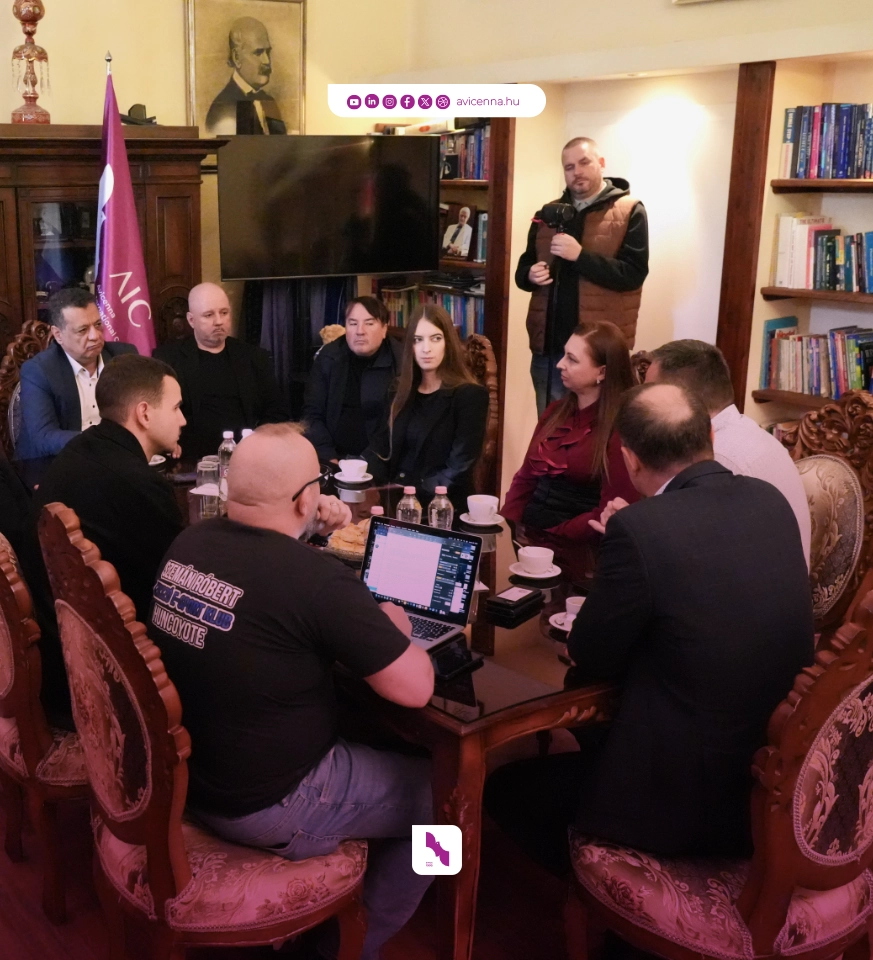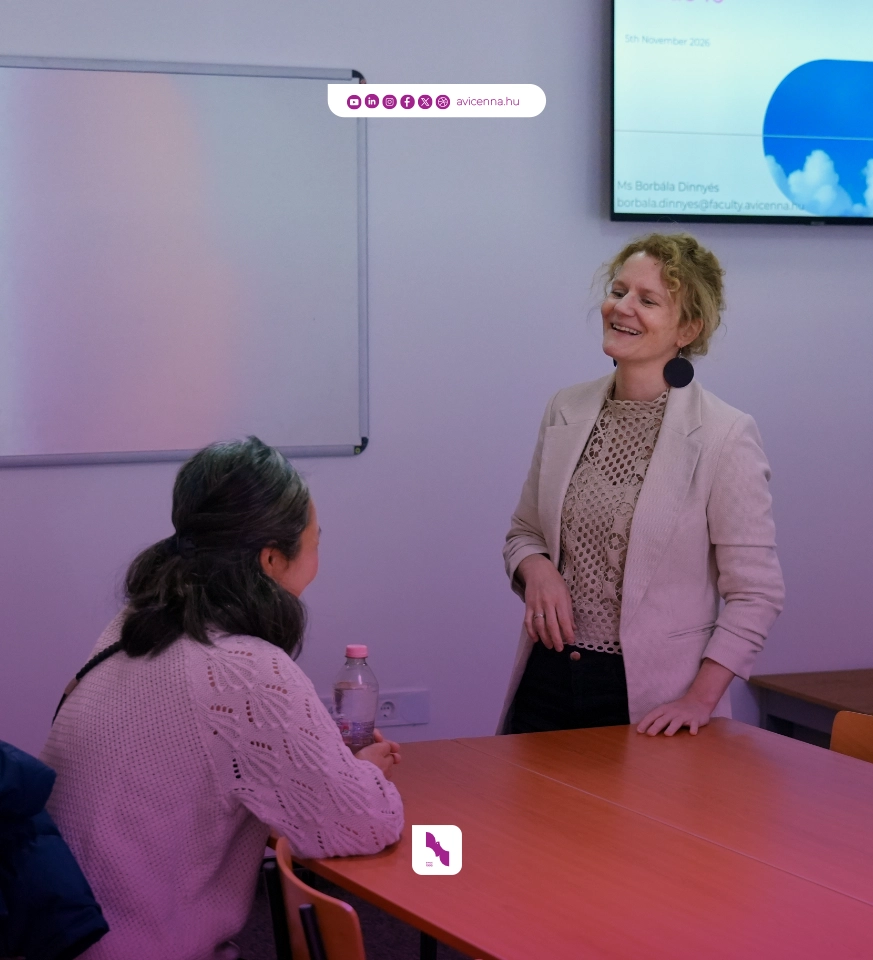

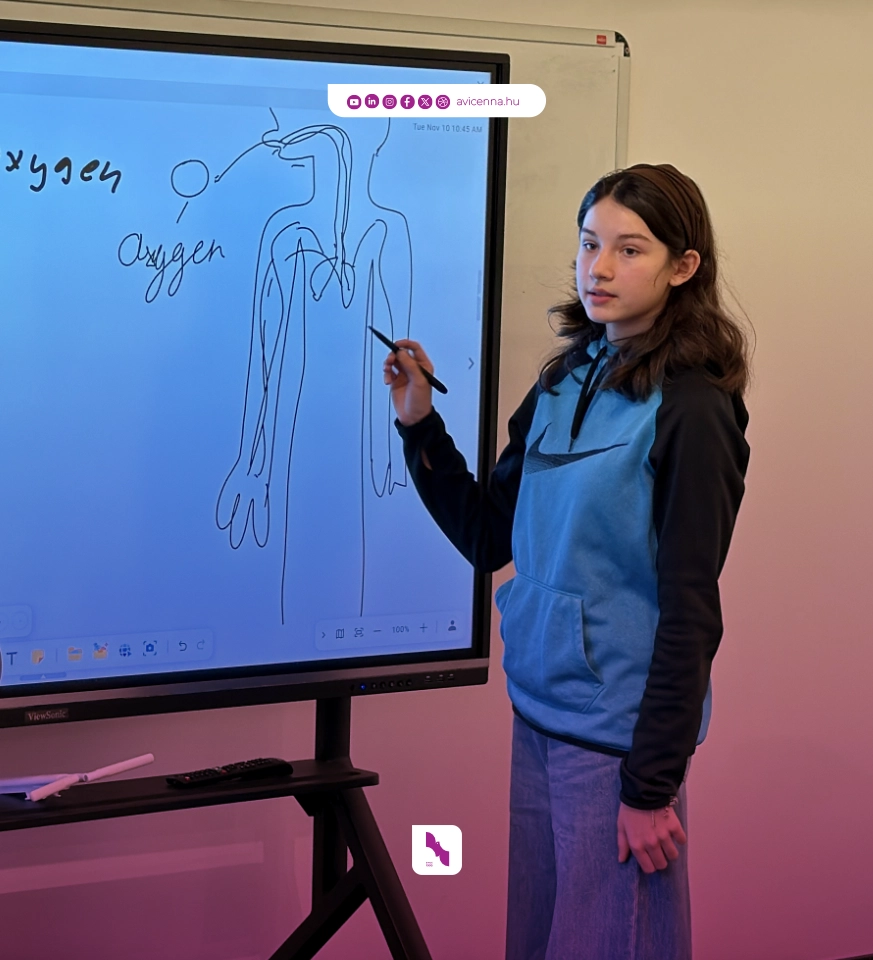

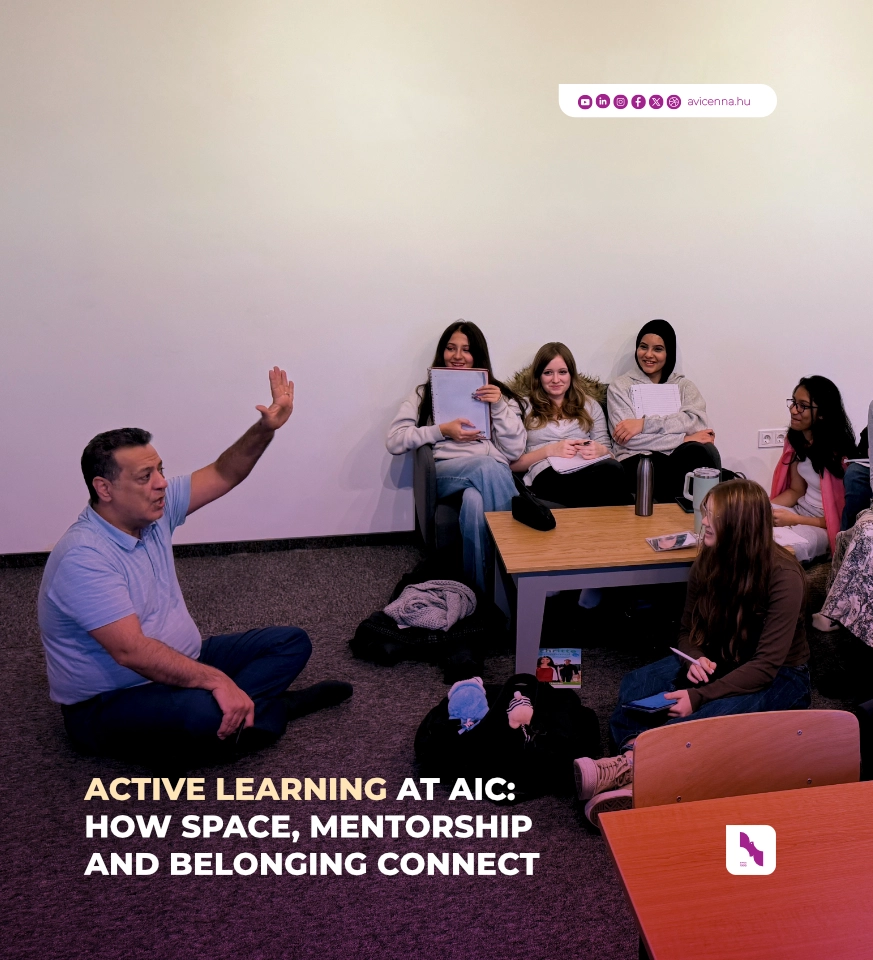
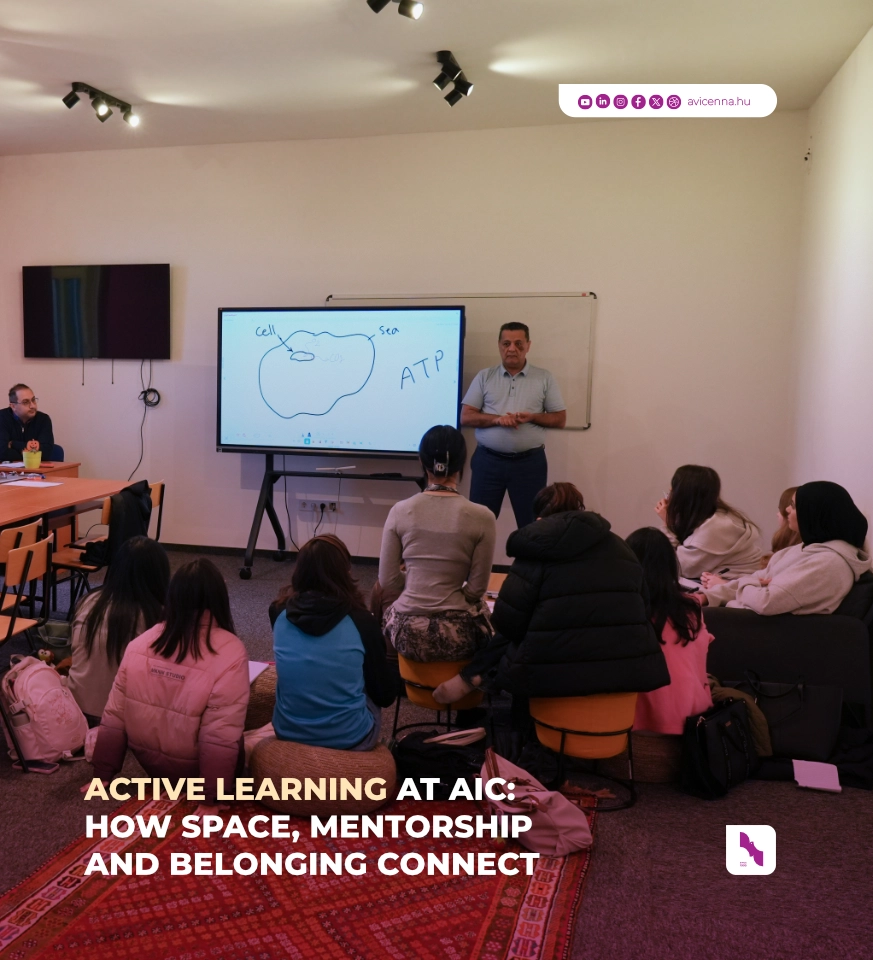
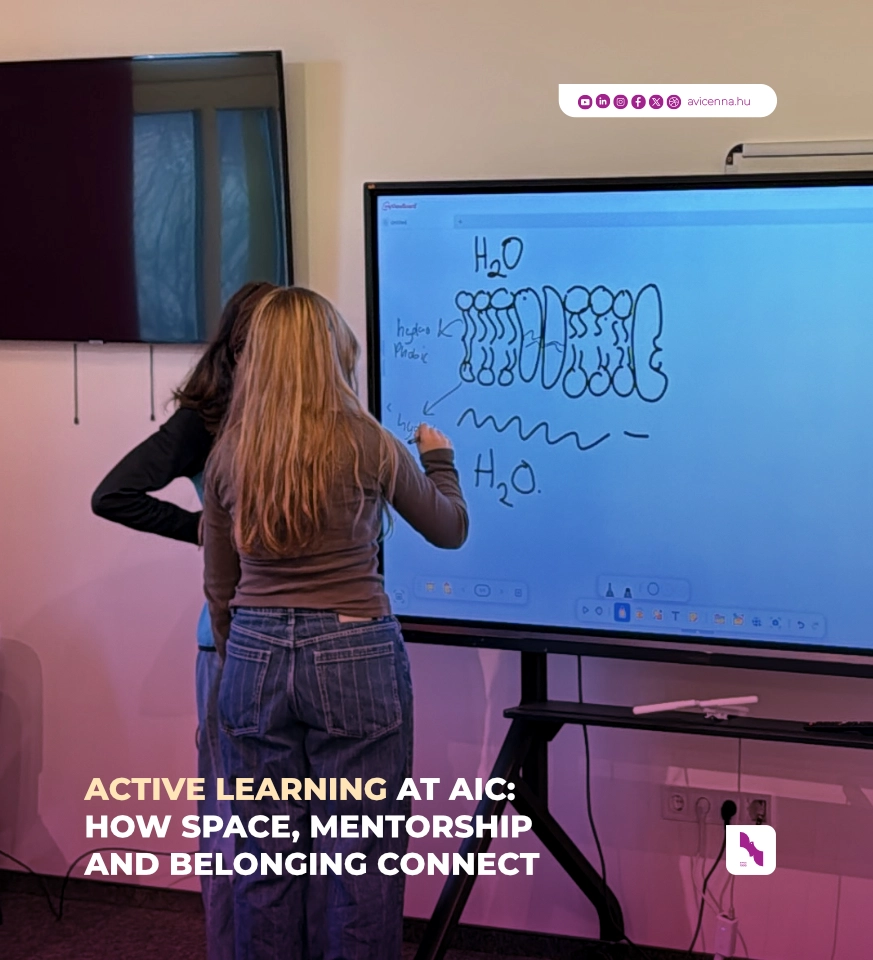
A student stands beside the interactive display, pen in hand, explaining a diagram of the human body. In another moment, a classmate draws a cell membrane while the group watches. Around the room, notebooks are open. Dr. Shahrokh MirzaHosseini is pictured both teaching at the display and sitting alongside the students.
These moments from a biology class at Avicenna International College (AIC) in Budapest on 10 November 2026 bring an important educational question into view: what opportunities does a student have to take part in their own learning?
For families choosing a college, the answer matters. A welcoming room makes an immediate impression, but it is also worth looking at what happens within it. Who explains an idea? How does the teacher guide the group? Where is there room for a student to try, reflect and ask for help?
Active learning at AIC connects these everyday questions with a wider direction: students taking responsibility for learning, supported by mentors, purposeful technology and a community that aims to feel like a second home.
What Active Learning Looks Like in a Biology Class
In the November session, students took their place at the display as well as around the room. The photographs show diagrams being drawn and explained, alongside listening and written work. Biology gave the session its academic focus; students had a visible role in working with the subject.
Cambridge International’s guidance on active learning describes an approach in which learners build understanding through thinking about and using knowledge. The emphasis is on the intellectual work students do, with opportunities designed by their teacher.
A diagram offers a useful example. A student can recognise an image in a textbook yet find it harder to explain the relationship between its parts. Drawing it and putting that relationship into words gives the teacher something specific to respond to. It can also give the student a clearer sense of which parts they understand and which need another look.
Participation takes different forms. A spoken explanation is one of them. Careful listening, a question written in a notebook and a considered response to someone else’s idea also deserve space. A thoughtful classroom makes room for students to contribute in more than one way.
Mentorship Gives Participation a Clear Purpose
Students need guidance as they learn to work more independently. A teacher brings subject knowledge, plans the learning activity and decides when to explain, when to ask a further question and when to give a student time to think.
This is central to AIC’s understanding of mentorship. Academic expertise remains essential. Alongside it comes attention to how a learner is approaching a task and what support might help them take the next step.
The November photographs capture different positions within that relationship. Dr. MirzaHosseini teaches beside the display in some images. In others, he sits with the group while a student works at the front. The collection makes space for both the educator and the learners to be seen.
For parents, a useful question is how this guidance continues after an answer has been given. Does the student understand why an explanation works? Can they identify something to practise? Those questions bring the conversation closer to the learning itself.
Why the Learning Space Is Changing
The room contains conventional tables and chairs alongside a sofa, smaller seating and a low table. A rug marks out a shared area, and the interactive display stands on a movable base. Students are pictured using different parts of the space during the session.
This mix reflects the intention behind AIC’s classroom redesign: to support focused study, conversation and interaction within a warmer, more flexible environment. Existing furniture has a place in that approach, alongside new elements that offer different ways to gather and work.
The practical question is how the room supports the activity. A written task needs a suitable working surface. An explanation at the display needs clear sightlines. A group conversation needs an arrangement in which people can see and hear one another.
Design is useful when it serves these needs. The photographs show one room in use and one example of the College’s evolving learning environment. They invite families to look at the relationship between the space, the activity and the people taking part.
A Second Home With Room to Grow
At AIC, the idea of a second home brings together belonging, care and responsibility. It describes the kind of community the College seeks to build through daily interactions: listening respectfully, looking after shared spaces and making it possible to ask for support.
Within a lesson, that intention has an academic purpose. Students need opportunities to offer an explanation while they are still developing it, hear another perspective and return to a difficult concept. Clear expectations and considerate guidance belong in the same environment.
For a young person studying in an international community, everyday experiences matter. Being listened to, knowing whom to approach and having a meaningful part in a group are practical expressions of belonging. They are also responsibilities shared by students and adults.
This thinking extends into other parts of college life. Our story about the student experience with AIDA explores how a familiar daily routine, lunch, can become an opportunity for community. Here, the focus is on the learning room and the relationships within it.
How This Connects With AIMES
AIMES forms part of AIC’s wider educational approach, connecting academic content, learning resources and activities with guidance and progression. The College’s academic manual describes a cycle that moves through learning objectives, resources, interactive learning, practice, application, assessment and feedback.
For a student, the underlying questions are straightforward: what am I learning, what should I work on and how will I know what to do next? AIC’s direction is to make that journey clearer and give learners a more active role within it.
The biology session provides a classroom example of participation and human guidance within this wider direction. The display gives students a shared surface on which to draw and explain. The teacher and the group remain part of the exchange.
Technology has a purpose when it helps someone engage with a subject. In these photographs, that purpose is visible in the work on the screen and the people using it.
What Families Can Look For in a Learning Environment
When visiting a college, families can learn a great deal by asking about an ordinary lesson. A few practical questions can help connect the appearance of a room with the educational experience it supports.
- What opportunities do students have to explain and apply what they are learning?
- How does the teacher find out what a student understands?
- How are students supported when they are unsure or reluctant to speak?
- What feedback helps them decide what to work on next?
- How does the space accommodate both individual work and learning together?
Students can bring their own questions too. They may want to know how group activities work, how to ask for help or what independent study involves. Their perspective belongs in the conversation from the beginning.
Our article on experiential learning in science explores a related question through learning beyond the classroom. Together, these examples offer families different ways to consider how academic knowledge, guidance and participation can connect.
Discover Learning at AIC
The November biology class offers a glimpse of students working with ideas, an educator guiding the session and a room being used in several ways. These everyday details give substance to AIC’s commitment to active learning.
As the College develops its learning environment, the purpose remains grounded in the learner: to build knowledge, practise independent thinking and take increasing responsibility with support available along the way.
If you are considering AIC for your child, speak with our team about the educational approach and opportunities to visit the Budapest campus. Bring the questions that matter to your family, and explore how learning at AIC could fit the next stage of your child’s education.