

By Dr. Mohammad Hosseini
A quiet revolution is taking place in education.
Most parents still ask their children a familiar question:
“What would you like to study at university?”
But perhaps a more important question should now be:
“Will that university program still exist by the time you graduate?”
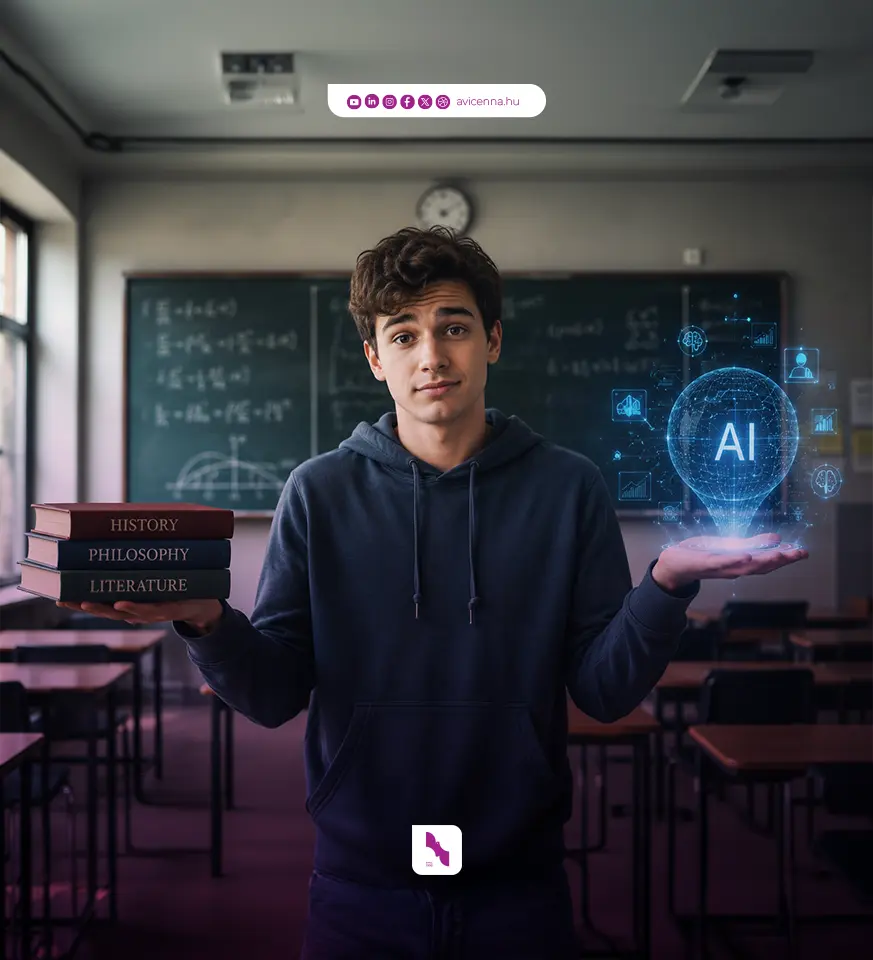
In one of the most dramatic educational transformations in recent history, China has reportedly discontinued approximately 12,000 university programs between 2021 and 2025 while simultaneously introducing more than 10,000 new programs, many focused on Artificial Intelligence, robotics, automation, intelligent manufacturing, and data science.
More than 30 percent of all university programs across the country have been affected.
While many nations continue to debate how Artificial Intelligence should influence education, China has already started redesigning higher education at scale.
The message is impossible to ignore.
Education is changing faster than most families realize.
What Exactly Is Happening?
According to reports published by Chinese and international educational media, universities across China are restructuring their academic offerings to better align with future economic and technological demands.
Several traditionally popular disciplines, particularly in humanities, arts, foreign languages, and management, have seen significant reductions.
At the same time, universities are rapidly expanding programs related to:
- Artificial Intelligence
- Robotics
- Intelligent Systems
- Semiconductor Technologies
- Data Science
- Automation Engineering
Some institutions have gone even further.
Shanghai University of Science and Technology reportedly suspended admissions to Product Design, arguing that Artificial Intelligence increasingly performs tasks previously completed by designers during early modelling and rendering phases.
Other universities have replaced traditional creative programs with interdisciplinary “smart” programs designed around collaboration between humans and intelligent technologies.
Why Are Universities Making Such Radical Decisions?
Three powerful forces appear to be driving this transformation.
1. Technology Is Reshaping Entire Industries
Artificial Intelligence is no longer limited to software companies.
Healthcare, finance, engineering, manufacturing, education, law, media, logistics, and creative industries are all being transformed by intelligent technologies.
Universities are responding accordingly.
2. The Labor Market Is Changing
Many employers no longer recruit solely based on academic knowledge.
Increasingly, organizations seek individuals who can:
- Learn continuously
- Work alongside intelligent systems
- Solve unfamiliar problems
- Adapt quickly
- Collaborate effectively
- Think critically
The future may belong less to those who know the most and more to those who can learn the fastest.
3. Lifelong Learning Is Becoming Essential
Educational experts increasingly argue that future professionals will need to reskill several times throughout their careers.
The traditional model of choosing one profession at age eighteen and practicing it unchanged for forty years may soon become obsolete.
Does This Mean Traditional Disciplines Will Disappear?
No.
Human capabilities such as creativity, empathy, ethical judgment, leadership, communication, and critical thinking remain irreplaceable.
However, these capabilities are increasingly expected to coexist with technological literacy.
Future graduates may need both:
- Strong human competencies
- Deep understanding of intelligent technologies
The challenge for schools is therefore not choosing between technology and humanity.
The challenge is integrating both effectively.
What Should Students Be Learning Today?
Regardless of their future university choices, students should begin developing competencies that are likely to remain valuable across multiple industries.
These include:
- Critical thinking
- AI literacy
- Digital fluency
- Creativity and innovation
- Communication skills
- Collaboration
- Adaptability
- Emotional intelligence
- Problem-solving
- Independent learning
Perhaps the single most important competency is learning how to learn.
In a world where knowledge evolves continuously, the ability to acquire new knowledge may become more valuable than the knowledge itself.
What Should Parents Be Asking?
As educational systems evolve, parents may wish to reflect on several important questions:
- Is my child being prepared for jobs that do not yet exist?
- Is my child’s education developing adaptability and resilience?
- Does learning extend beyond examinations and memorization?
- Is technology being used meaningfully and responsibly?
- Is my child learning how to learn independently?
These questions may become increasingly important during the coming decade.
A Broader Perspective
The developments in China should not necessarily be viewed as a blueprint for every educational system.
Educational researchers continue to debate the speed and direction of these changes.
Nevertheless, one conclusion appears increasingly difficult to dispute:
The future of education will likely be more interdisciplinary, more technology-enabled, and far more dynamic than anything previous generations experienced.
Schools that help students become curious, adaptable, responsible, and lifelong learners may be best positioned to prepare young people for this uncertain future.
Because the question is no longer whether education will change.
The question is whether we are changing quickly enough.
SOURCE
This article was inspired by recent reports published by Hungarian educational media Eduline and international coverage regarding ongoing reforms in Chinese higher education.