


By Dr. Mohammad Hosseini
For many families, reading about Artificial Intelligence, automation, and the future of work can feel overwhelming. Almost every week, new headlines warn us that jobs will disappear, universities are redesigning programs, and entire industries are being transformed.
It is understandable that many parents and students feel uncertain.
However, there is another side to this story, one that receives far less attention.
What if today’s students are not entering the most difficult period in history, but one of the most promising?
What if, despite all the changes and uncertainties, today’s young people are actually growing up in a world filled with more opportunities than any generation before them?
I believe that they are.
Not because success will become easier. Not because technology will solve every problem. And certainly not because the future will be free of challenges.
Rather, today’s students may be the luckiest generation in history because they are growing up at a time when knowledge, technology, global connectivity, and creative possibilities are more accessible than ever before.
For those who learn how to adapt, think critically, remain curious, and use technology wisely, the future may offer possibilities that previous generations could hardly have imagined.
A Different Way to Look at Change
Throughout history, every major technological breakthrough has initially created uncertainty.
The Industrial Revolution transformed agriculture and manufacturing. The arrival of computers changed offices forever. The internet reshaped communication, business, media, and education. In each case, many people feared that opportunities would disappear.
Yet history repeatedly shows us that while some jobs and skills become less relevant, new industries, new professions, and entirely new forms of value creation emerge.
Change has always closed certain doors, but it has also opened many others.
Artificial Intelligence is unlikely to be different.
Yes, some professions will evolve dramatically. Some tasks will be automated. Certain university programs may change or disappear, as we are already seeing in countries such as China.
At the same time, entirely new opportunities are emerging at an extraordinary pace.
The question is therefore not whether the future will change.
The question is whether students are developing the mindset and skills needed to thrive within that change.
Why This Generation Has a Historic Advantage
Only a generation ago, access to world-class education, international networks, expert mentors, and advanced technological tools was limited to a relatively small number of people.
Today, a motivated student with a laptop and an internet connection can attend online courses offered by leading universities, collaborate with peers across continents, build digital products, launch entrepreneurial projects, learn new languages, and even receive personalized support through AI-powered tools.
For the first time in history, high-quality knowledge is becoming widely accessible.
This does not mean that success has become automatic. Hard work, discipline, resilience, and character remain essential.
What has changed is the starting point.
Students today have access to resources and possibilities that previous generations simply did not have.
That is a remarkable advantage.
The Future of Work Is Changing, but So Are Opportunities
According to the World Economic Forum’s Future of Jobs Report 2025, approximately 22 percent of today’s jobs are expected to undergo significant transformation by 2030. At the same time, the report projects the creation of around 170 million new roles worldwide.
In other words, the future is not simply about jobs disappearing.
It is also about new forms of work being created.
Many of the most exciting careers of the coming decades are likely to emerge at the intersection of disciplines, combining human expertise with technology.
Fields such as healthcare and Artificial Intelligence, engineering and sustainability, psychology and digital wellbeing, education and intelligent learning systems, and business combined with data science are already creating entirely new professional pathways.
Students do not need to predict the future perfectly.
Instead, they need to become the kind of people who can grow, learn, and adapt as new opportunities emerge.
The Greatest Advantage Will Belong to Learners
For generations, education often focused on acquiring and remembering information.
Today, information is everywhere.
The true competitive advantage increasingly belongs to those who can ask meaningful questions, evaluate information critically, collaborate effectively, solve complex problems, and continue learning throughout their lives.
Perhaps the single most important skill of the future will be learning how to learn.
Knowledge will continue to evolve. Technologies will continue to change. New professions will continue to emerge.
Students who enjoy learning and remain intellectually curious will be able to reinvent themselves repeatedly throughout their lives.
That may become one of the greatest forms of security in the future.
Artificial Intelligence Can Become a Powerful Partner
Public discussions often portray Artificial Intelligence primarily as a threat.
While caution and responsible use are certainly important, this perspective tells only part of the story.
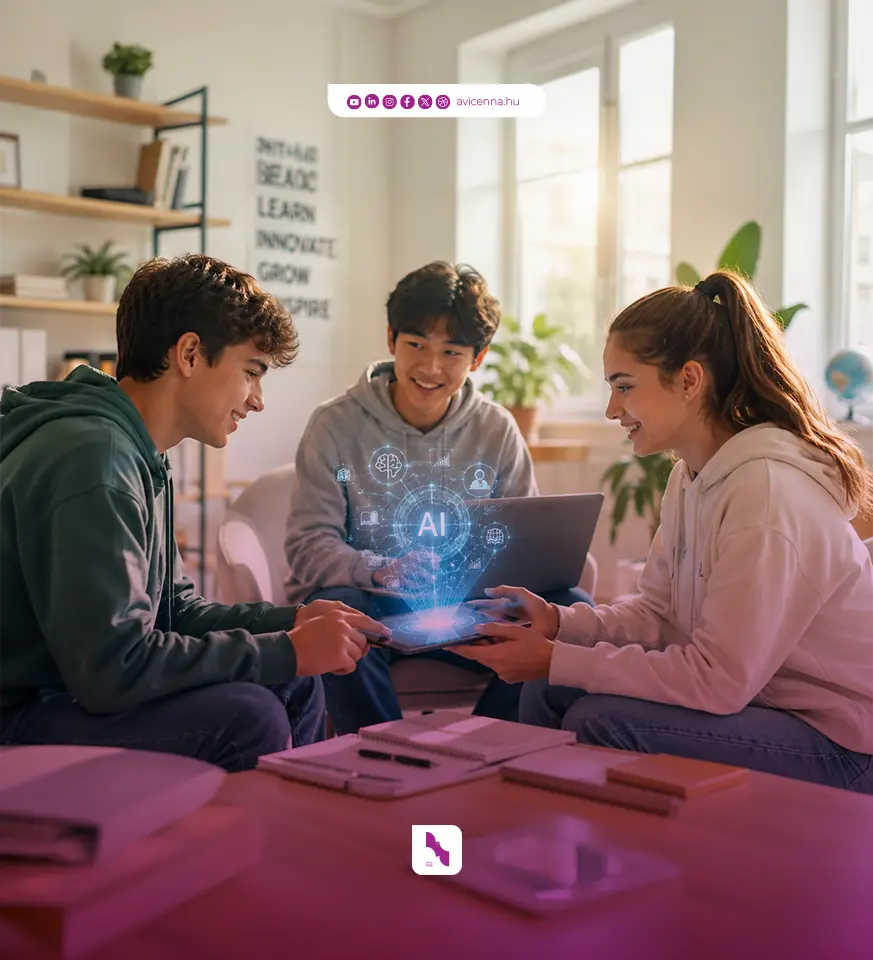
For well-prepared students, AI can become an extraordinary learning partner.
It can help explain difficult concepts, generate ideas, provide immediate feedback, support language learning, organize information, and encourage creative exploration.
The crucial difference lies not in the technology itself, but in how it is used.
Students who rely on AI passively may become dependent on it.
Students who use AI critically, creatively, and responsibly may become significantly more capable.
The future is unlikely to belong to people who compete against Artificial Intelligence.
It is more likely to belong to those who learn how to work intelligently alongside it.
Five Gifts That Families and Schools Can Give Students Today
No family can predict exactly what the world will look like twenty years from now.
Fortunately, they do not need to.
Instead of trying to predict every future profession, families and schools can focus on developing qualities that remain valuable in almost every future scenario.
These include:
Curiosity – encouraging students to ask questions, explore ideas, and seek deeper understanding.
Adaptability – helping young people respond constructively to change rather than fear it.
Confidence – allowing students to try, fail, improve, and grow.
Character – nurturing honesty, empathy, responsibility, and resilience.
A Love of Learning – perhaps the most valuable gift of all, because students who genuinely enjoy learning will continue opening new doors throughout their lives.
What Should Students and Families Be Thinking About Today?
The most important questions may no longer be:
“What career should I choose?”
or
“Which university should I attend?”
Increasingly, the deeper questions are:
“What kind of learner am I becoming?”
“Am I developing the ability to adapt, collaborate, and think independently?”
“Am I learning only for examinations, or am I learning for life?”
“Am I using technology merely to complete tasks faster, or to think better and create more?”
The answers to these questions may shape a student’s future far more than any single academic decision.
What Schools Must Do Differently
Preparing students for the future requires more than simply adding technology to classrooms.
Schools must create environments where students actively participate in learning, develop confidence, strengthen human skills, and learn how to navigate complexity.
Technology should support learning, but it should never replace meaningful human relationships.
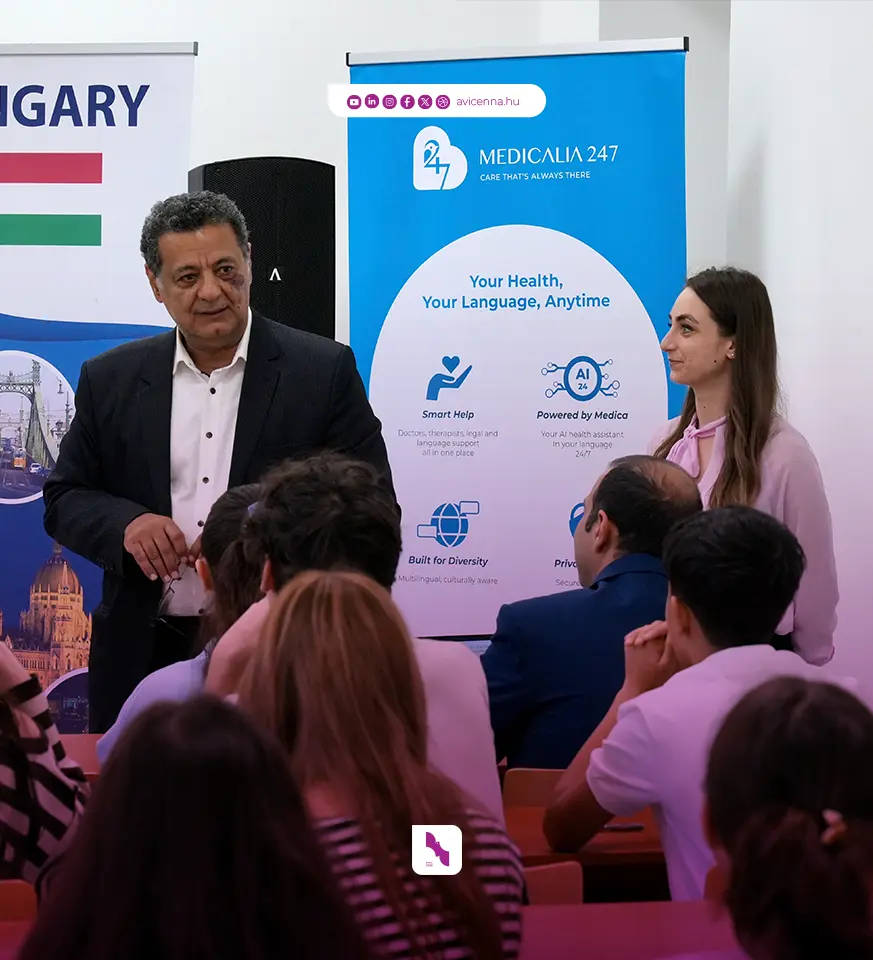
At Avicenna International College, we believe that the future of education lies in combining AI, passionate human mentorship, and active learning.
Our goal is not simply to prepare students for examinations.
It is to help them become thoughtful, adaptable, confident, and lifelong learners who are ready to shape the future rather than simply react to it.
A Final Message to Students
You are not growing up in a hopeless era.
You are growing up during one of the most transformative and opportunity-rich periods in human history.
You have access to knowledge, tools, networks, and possibilities that previous generations could scarcely imagine.
Your future will not be determined by technology alone.
It will be shaped by your curiosity, your character, your willingness to learn, and your courage to embrace change.
The future is not something to fear.
It is something to prepare for.
And for those who prepare well, it may be brighter than we think.



If I were 16 years old again today, I would spend far more time learning how to learn, how to think critically, and how to adapt to change.
Technical skills matter. Degrees matter.
But in a world that changes rapidly, the ability to continuously learn and reinvent ourselves may become the ultimate competitive advantage.