


What does medical university demand after admission? Lessons from Semmelweis University’s 2026 opening ceremony offer a practical guide to science, academic English, study habits, and pre-medical preparation.
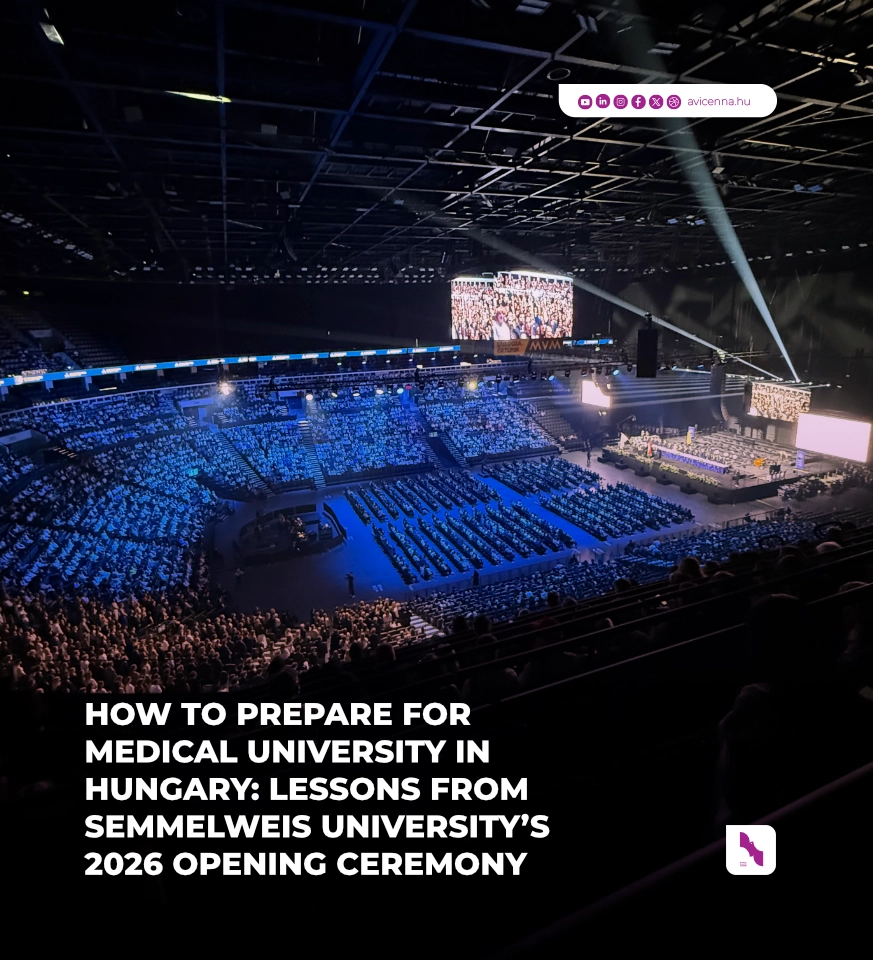
On September 6, 2026, Semmelweis University opened its 256th academic year at Budapest’s MVM Dome. According to the university’s official report, approximately 4,400 new students began their studies across six faculties and the doctoral school—an 8% increase over the previous year. More than one-third of the new students entered English- or German-language programs.
For those students, the ceremony marked an achievement. For someone still considering how to prepare for medical university in Hungary, it raises a more useful question: what should you be ready for when medical university actually begins?
Entrance requirements matter. But so do the first lecture, the first complex scientific explanation in another language, the first oral examination, and the first week when several demanding subjects compete for your attention.
Good preparation connects these moments. It helps you pursue admission while developing the scientific understanding, academic language, and study habits you will need afterward.
Getting Into Medical University Is Only the First Threshold
At the opening ceremony, Rector Béla Merkely emphasized that the new students had crossed an important threshold, but were now entering a demanding field in which learning continues throughout professional life.
That distinction matters for applicants.
Entrance readiness concerns what your target university asks you to demonstrate during selection. University readiness is broader: understanding unfamiliar material, explaining scientific reasoning, organizing independent study, communicating clearly, and responding constructively when you do not understand something.
The two goals support each other, but they are not identical. A useful preparation plan therefore asks both: What must I demonstrate to enter? And what must I be able to do once classes begin?
1. Build Scientific Foundations Before the Workload Accelerates
Strong preparation starts with knowing whether your scientific understanding is genuinely secure.
Can you explain a biological process without repeating a memorized paragraph? Can you work through a chemistry problem and explain why each step is necessary? Can you interpret units, quantities, and a scientific graph rather than simply recognize a familiar question?
Biology and chemistry deserve particular attention for students considering medicine, dentistry, pharmacy, and related health fields. Physics and quantitative reasoning can also strengthen the way you approach scientific problems.
Entrance formats differ between institutions. Semmelweis University, for example, currently assesses applicants to its English-language Medicine, Dentistry, and Pharmaceutical Sciences programs through written tests in Medical Biology, Medical Chemistry, General English, and Biomedical English, followed by a personal interview that also evaluates motivation, English communication, and oral scientific knowledge.
That is one useful example of why medical preparation may require more than revising general school science. Applicants should always check the current requirements of their own target universities.
A practical starting point is to divide your science topics into three groups: concepts you can explain, concepts you recognize but cannot apply confidently, and concepts you have not yet studied.
Spend serious time on the second group. Familiarity can feel like understanding until the question changes.
2. Learn to Study Medicine in English, Not Just Pass an English Test
For an English-taught medical degree, English is not simply an admissions checkbox. It is the medium through which you learn science.
Everyday conversational confidence helps, but academic study requires more. You need to follow lectures, understand scientific terminology, read dense material, explain a process precisely, ask useful questions, and communicate your reasoning under pressure.
Semmelweis’s current entrance format illustrates this clearly: English and Biomedical English are assessed alongside Biology and Chemistry, and the interview also considers the applicant’s English communication skills.
Preparation should therefore combine science and language rather than treating them as completely separate subjects.
Read a short scientific passage, close it, and explain the central idea aloud. Watch an educational presentation and take notes in English. Practice explaining why an answer is correct rather than giving only the final answer. Build medical and scientific vocabulary through meaning and context.
You do not need perfect pronunciation or effortless fluency before beginning preparation. You need an honest picture of what you currently understand and communicate, followed by regular practice.
3. Prepare to Apply Knowledge, Not Only Memorize It
Semmelweis University’s recent curriculum development provides another useful signal about the direction of medical education.
Its Curriculum 2.0 reforms increased the emphasis on practice-oriented education, clinical block teaching, skills development, seminar and small-group learning, reflective learning, internships, and student involvement in clinical work. In 2026, the university began discussing the next development direction, Curriculum 2.1.
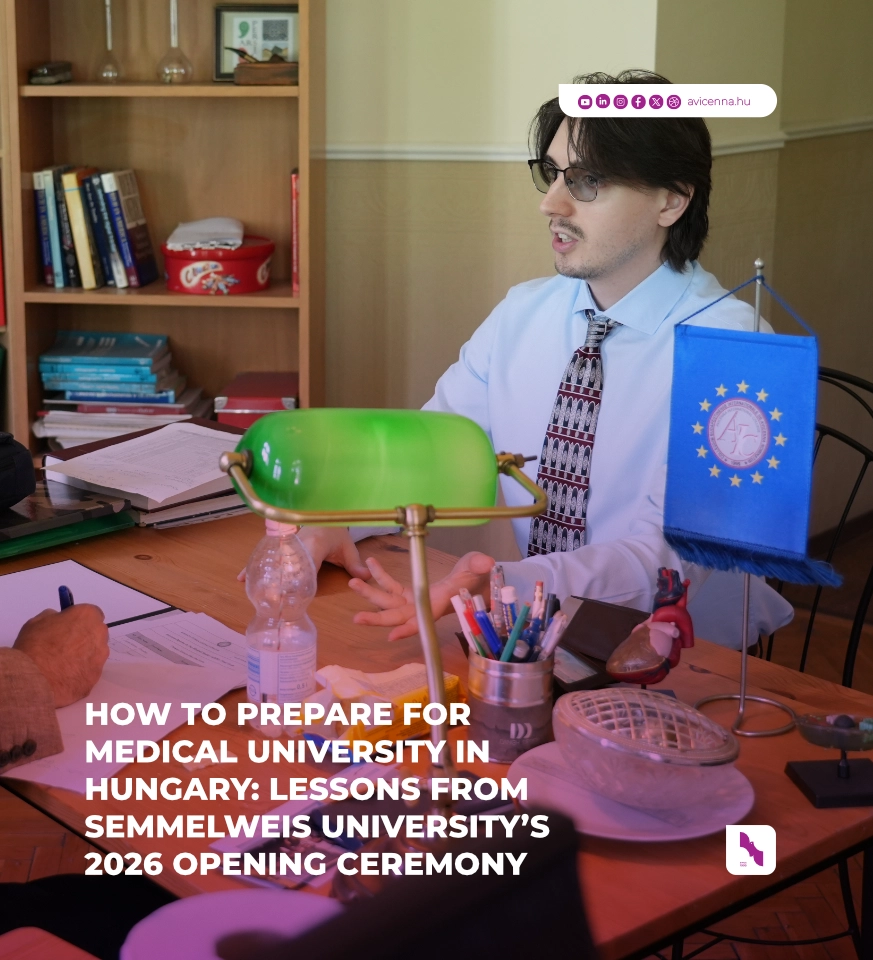
For a prospective student, the lesson is not to start practicing medicine before university. It is to become comfortable using knowledge rather than only repeating it.
When you study, ask what would happen if one condition changed. Explain what evidence supports a conclusion. Compare two possible explanations before deciding which one fits the facts better.
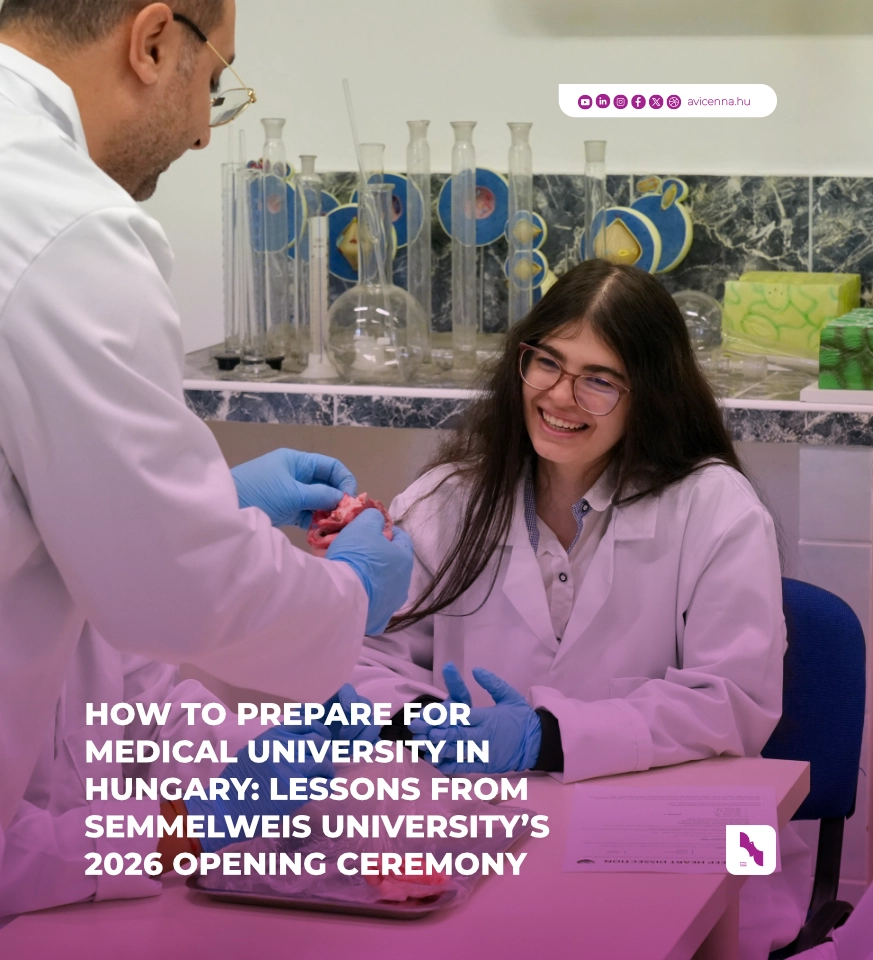
Where supervised laboratory learning is available, use it to develop careful observation, accurate recording, safe working habits, and the ability to separate a result from your interpretation of it.
These are foundations for future medical education. They do not replace clinical training, but they help students move from memorization toward scientific thinking.
4. Build the Study Discipline Medical Education Demands
One of the strongest messages of the 2026 Semmelweis opening ceremony was that medicine and health sciences require lifelong learning.
That mindset starts well before graduation.
A preparation year should help you build a study routine you can actually sustain. Create a realistic weekly plan that includes new material, revision, practice questions, and time to address weak areas. Leave space for sleep, ordinary responsibilities, and recovery. A timetable that works only under perfect conditions is unlikely to survive a demanding academic term.
After studying, test what you can explain without your notes. Keep a short record of mistakes: what went wrong, why it happened, and what you will do differently next time.
If the same topic repeatedly causes difficulty, seek clarification instead of simply increasing the number of hours spent rereading it.
Independent learning does not mean learning alone. It means taking responsibility for identifying what you need, using available support, and following through.
5. Medicine Requires Communication, Responsibility, and Empathy
The opening ceremony also placed medical education within a larger professional purpose. Semmelweis’s official account of the rector’s remarks connected education, research, and healing with service to other people.
That is important because medical preparation can easily become dominated by scores, exams, and admissions targets.
Science matters enormously. So do communication, responsibility, and the ability to recognize that another person may experience the same situation very differently from you.
Before university, students can begin developing habits consistent with that responsibility: listening carefully, asking before assuming, explaining what they understand, acknowledging what they do not know, contributing reliably in group work, and responding respectfully to disagreement.
A pre-medical program cannot turn someone into a doctor. It can, however, create opportunities to practice communication, accountability, and thoughtful participation while building the academic foundations required for later professional training.
6. Learn to Function in an International Academic Environment
More than one-third of the approximately 4,400 new students highlighted in Semmelweis University’s 2026 opening report entered English- or German-language programs.
For international applicants, that points to another form of readiness: learning to function in a multicultural academic environment.
Classmates may have studied different curricula, experienced different teaching styles, or developed different expectations about participation and asking questions. A method that felt normal at school may need adjustment.
Practice working with people whose approaches differ from yours. When completing a group task, agree on responsibilities and deadlines rather than assuming everyone interprets them the same way. If an instruction is unclear, ask for clarification early.
Daily organization matters as well. Students moving abroad should think about study space, meals, transportation, accommodation, budgeting, and maintaining a support network.
The aim is not to remove every uncertainty before moving to Hungary. It is to reduce avoidable distractions and become comfortable seeking reliable information when something is unfamiliar.
What Should a Serious Pre-Medical Program Actually Prepare You For?
The lessons above suggest a practical framework for comparing preparation programs.
A serious pre-medical program should help students build:
1. Scientific Foundations
Does the program identify gaps and develop real understanding in Biology, Chemistry, and other relevant sciences, or mainly rehearse familiar answers?
2. Academic and Medical English
Will students practice reading, listening, explaining, and discussing scientific material in English?
3. Entrance-Examination Readiness
Is preparation connected to the current selection requirements of target universities while clearly recognizing that institutions use different formats?
4. Oral Communication and Interview Confidence
Are there opportunities to explain reasoning, respond to questions, and receive meaningful feedback?
5. Independent Study Habits
Will students learn to organize their workload, recognize weak areas, and evaluate their understanding between classes?
6. Laboratory and Scientific Thinking
Where practical work is offered, does it develop safe working habits, observation, interpretation, and clear reporting?
7. Resilience and Academic Discipline
How does the program help students respond to difficulty and turn feedback into an improvement plan?
8. Readiness for an International Academic Environment
Will students practice communicating and collaborating with people from different educational and cultural backgrounds?
This is a framework for evaluating preparation—not an official admission checklist from any university.
Ask providers for concrete evidence: curriculum details, assessment formats, sample schedules, feedback processes, and examples of how academic support works when a student falls behind.
How AIC Approaches Pre-Medical Preparation
The Avicenna Diploma in Pre-Medical Studies (ADPMS) is designed as a structured bridge between secondary education and preparation for competitive medical university study in Europe.
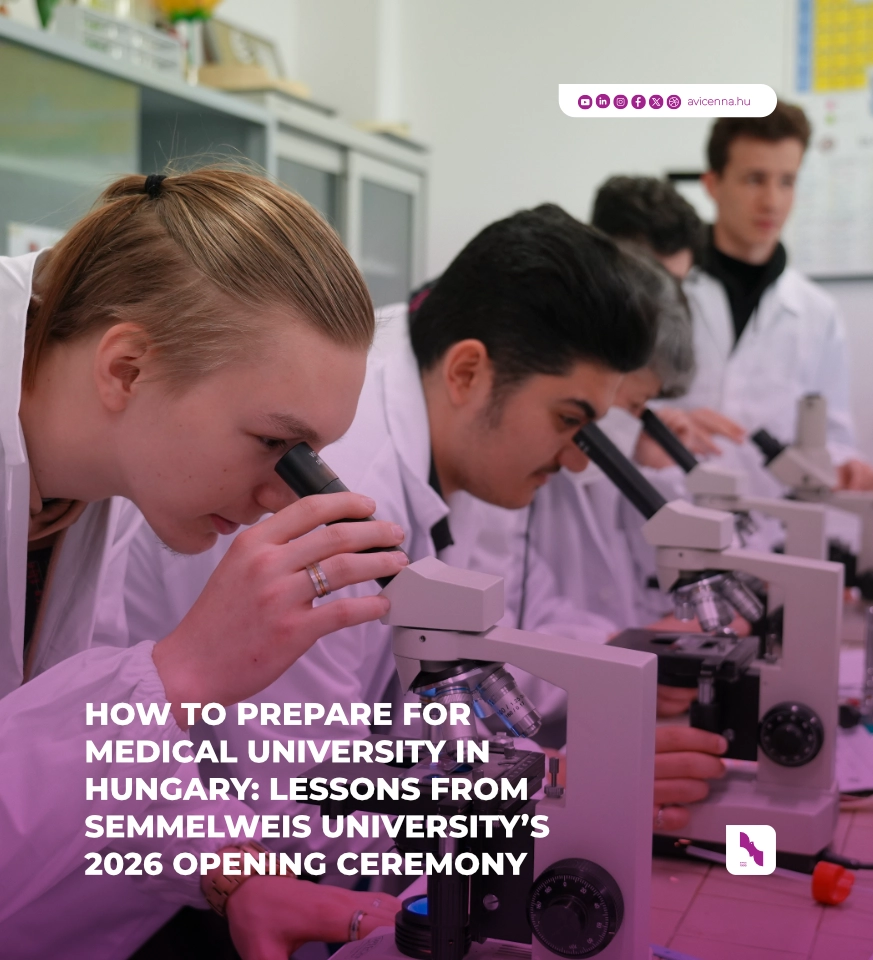
AIC’s current ADPMS curriculum includes Biology with medical focus, Chemistry for medical sciences, Physics foundations, Academic English for Medicine, research skills, and laboratory practice.
Its teaching and assessment model also includes continuous assessment, examinations, research assignments, structured academic supervision, and an emphasis on disciplined study habits and entrance-examination readiness.
Those features should be evaluated against the readiness framework above.
For a student whose scientific knowledge is uneven, whose previous education was delivered in another language, or who needs more experience explaining scientific ideas in English, a structured preparation year can provide time and feedback before the academic pressure of medical university increases.
AIC’s 2026 ADPMS final assessments also included both written and oral components, offering students experience in demonstrating knowledge in more than one format.
ADPMS should be understood as preparation, not as a guarantee of university admission. Applicants must meet the requirements and complete the selection process of their chosen universities.
References to Semmelweis University in this article describe a current medical-education and admissions context. They do not imply that ADPMS is a Semmelweis-endorsed program, an official Semmelweis pathway, or a guarantee of admission to Semmelweis University.
Is a Pre-Medical Year Right for You?
A pre-medical year may be useful if you are changing educational systems, returning to science after a gap, preparing to study in a language different from the one used at school, or aiming for a competitive university while your preparation remains uneven.
It may also be useful when the ambition is clear but the academic habits are not yet consistent—for example, strong Biology with weaker Chemistry, reasonable written performance with limited oral confidence, or good knowledge without a sustainable study routine.
An additional year is not automatically the right choice for everyone.
If you already have strong science foundations, can study effectively in the teaching language, and meet the current expectations of your target universities, direct application may be appropriate.
Before deciding, carry out an honest readiness review. Attempt suitable official practice material. Explain a science topic aloud. Try maintaining a structured study schedule for several weeks. Then ask what an additional preparation year would genuinely improve.
Families should consider time and cost as well as academic benefit. The useful question is not whether an extra year feels reassuring. It is whether that year has a clear educational purpose for the individual student.
Preparing for the Day After Admission
An opening ceremony makes the beginning of university visible. The preparation that supports it is less ceremonial: strengthening a difficult concept, explaining an answer more clearly, following a study plan, responding to feedback, and learning when to ask for help.
The 2026 Semmelweis opening ceremony presented admission as the beginning of a demanding and meaningful professional journey. Its current curriculum direction reinforces the importance of practice, skills, reflection, and lifelong development.
For students preparing for Medicine, Dentistry, Pharmacy, or related health fields, entrance preparation matters—but it should not be the only goal.
You do not need to arrive knowing everything.
You should aim to arrive with sound scientific foundations, workable learning habits, stronger academic communication, and the confidence to keep developing.
The better question is therefore bigger than “Can I get admitted?”
Will I be ready when medical university actually begins?