

Artificial Intelligence is no longer a distant concept in education. It is already reshaping how institutions think, operate, and evolve.
In this article, Dr. Shahrokh MirzaHosseini explores why the real challenge is not adopting AI, but redesigning education at the system level.
From AI Adoption to AI Transformation: Rethinking Education at the System Level
04th May 2026
By Dr. Shahrokh MirzaHosseini
President, Avicenna International College
Board Member of the FEDE Steering Committee
Chair of the FEDE Artificial Intelligence in Education Committee
Artificial Intelligence is no longer an emerging trend in education; it is a reality actively reshaping how institutions operate, how learning is designed, and how leadership decisions are made. As the world rapidly changes, education must keep pace. We must rethink and remodel education at the system level. Superficial or remedial technological adoptions will not keep education relevant to the needs of the next generation.
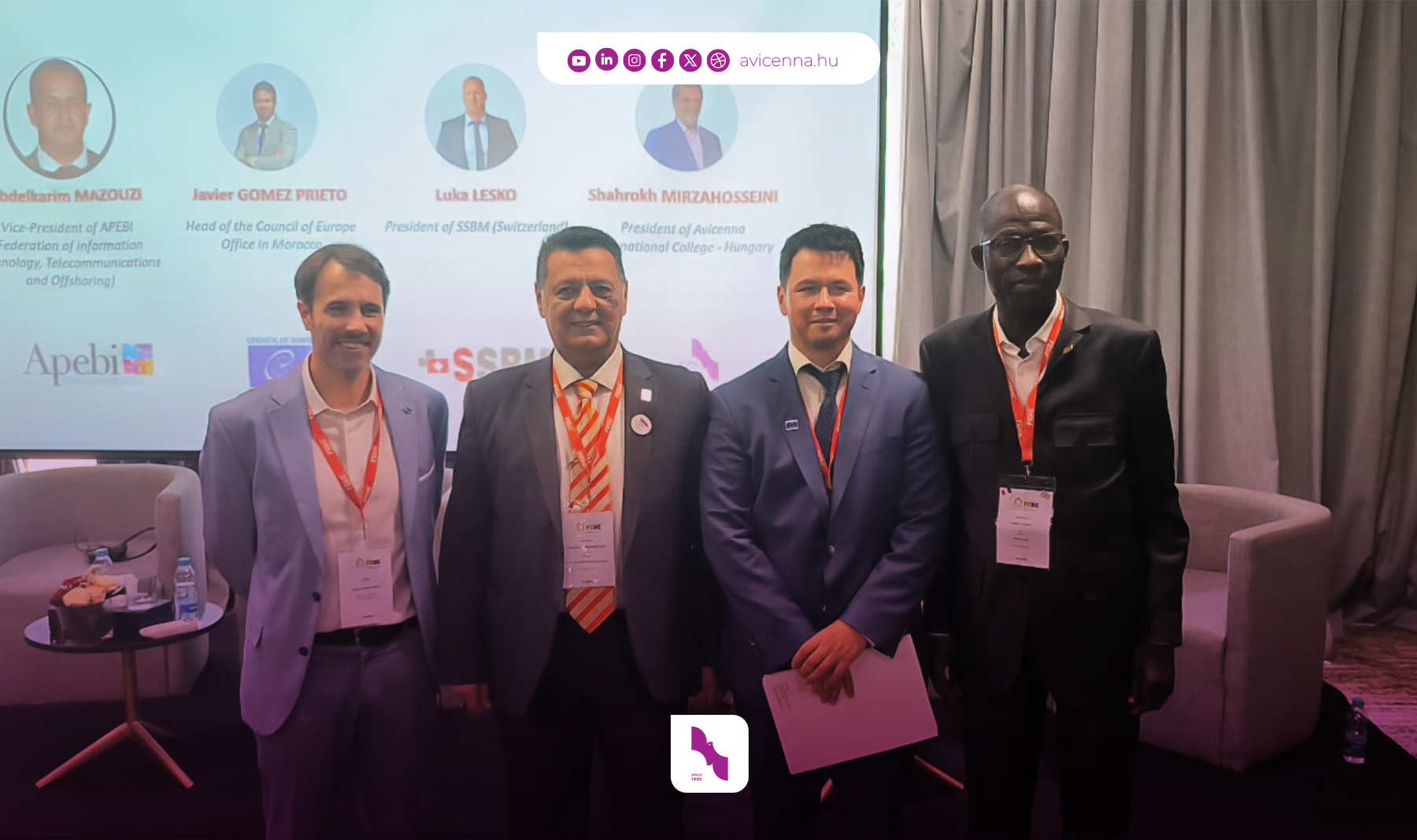
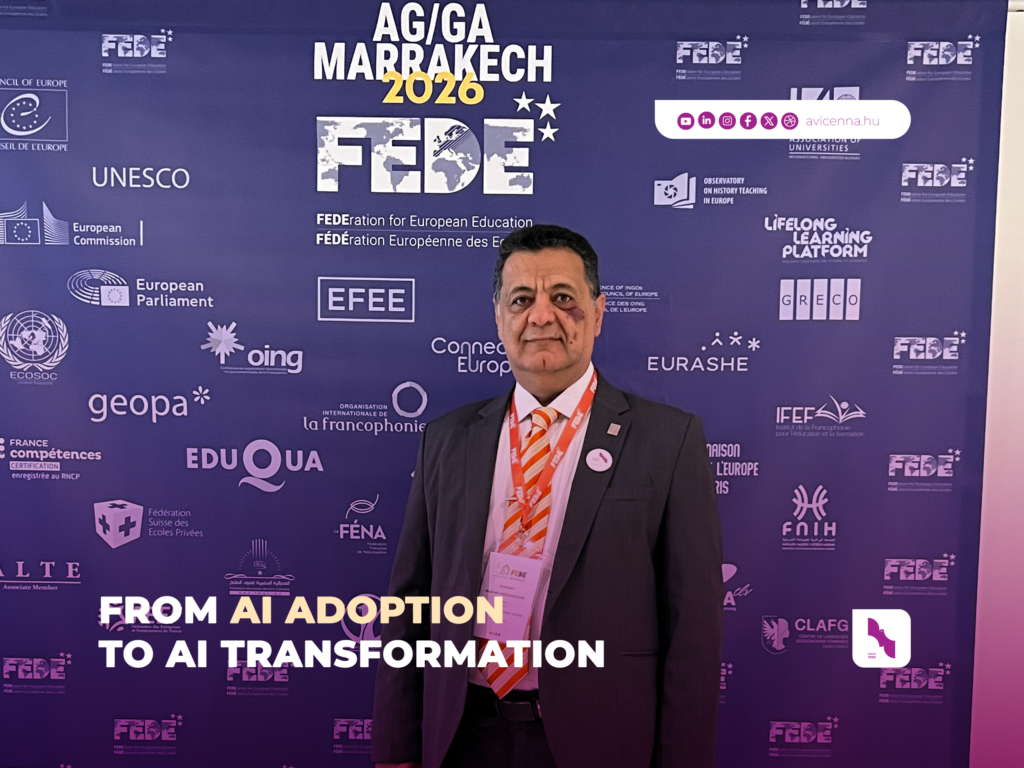
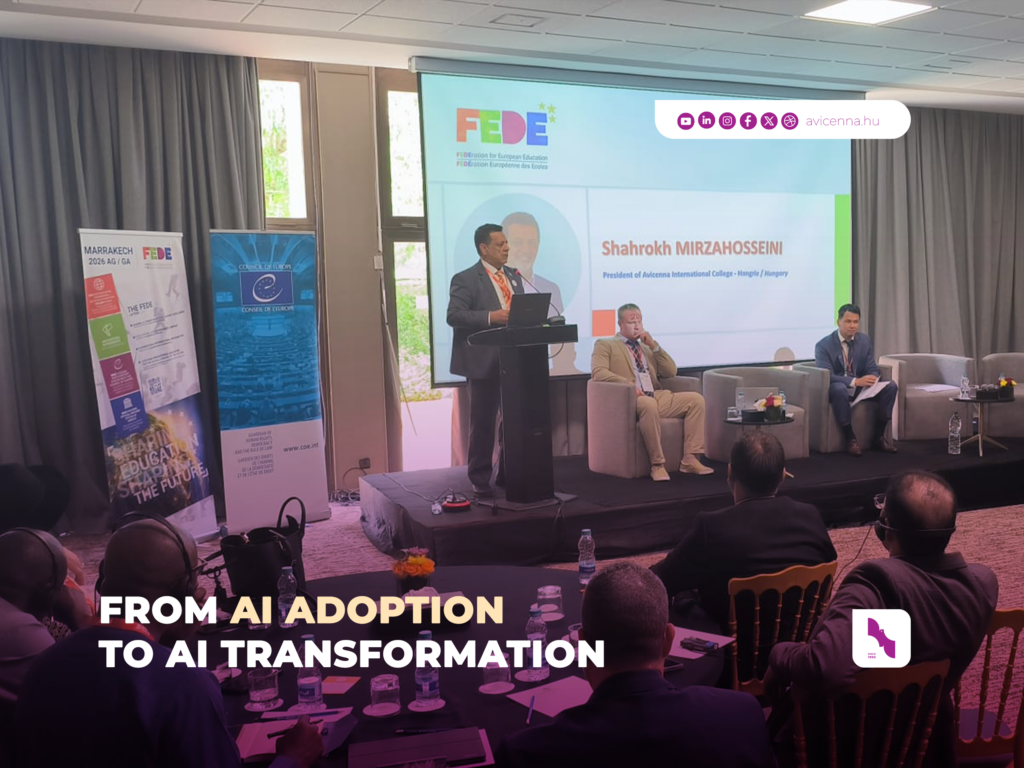
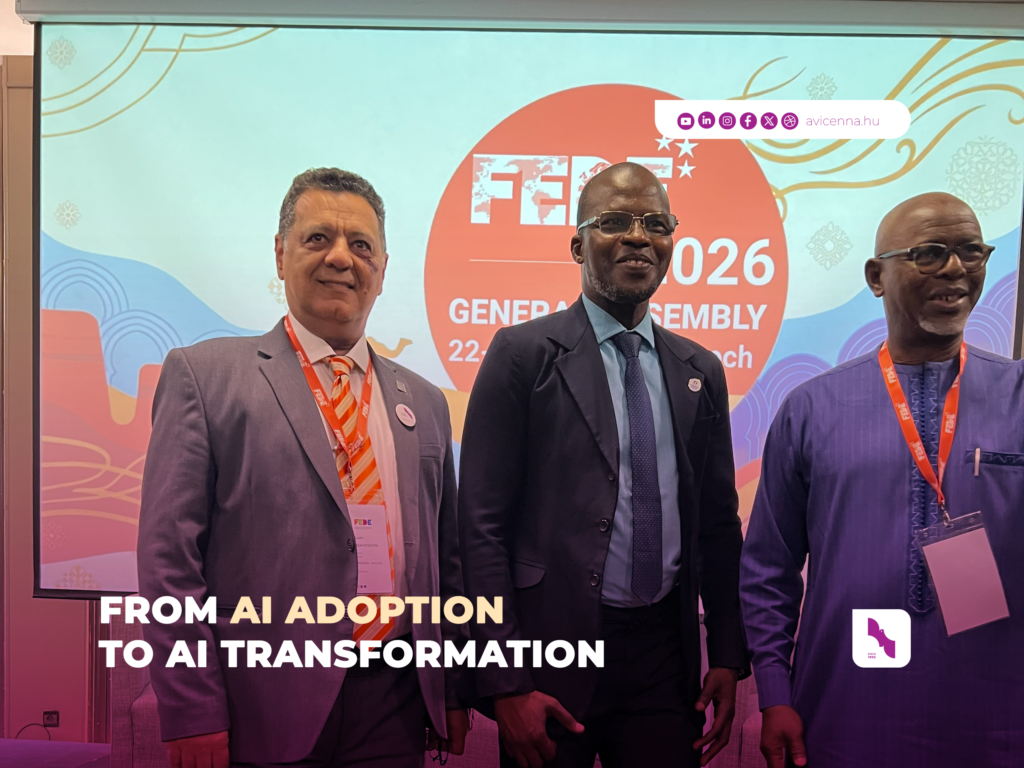
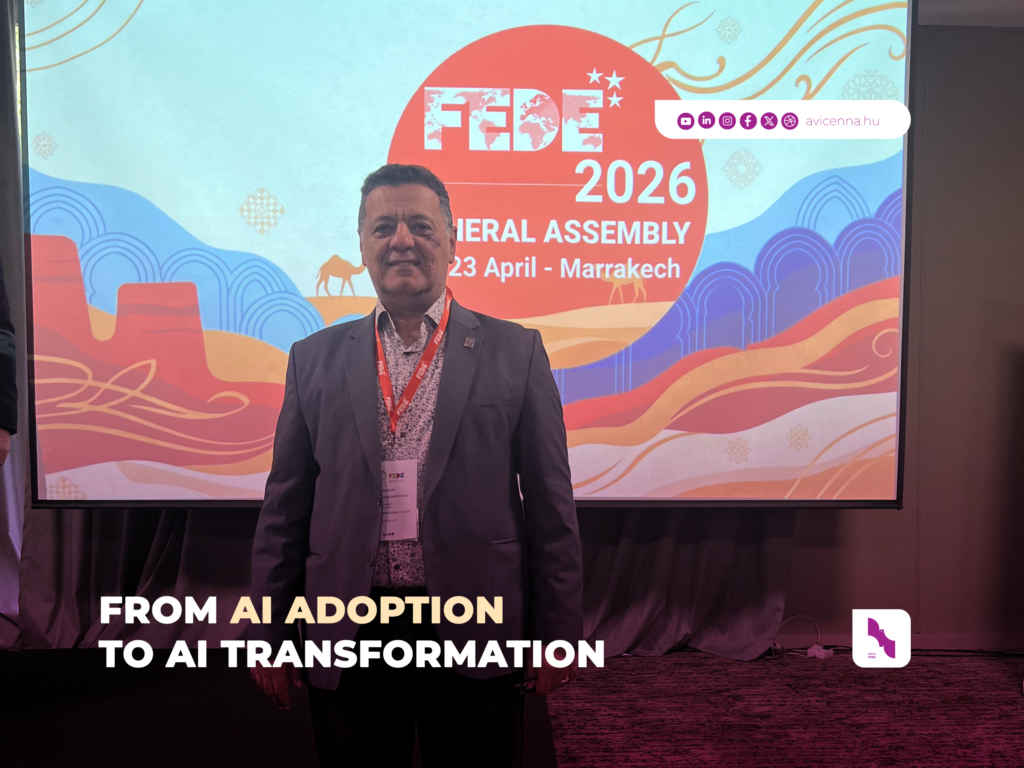
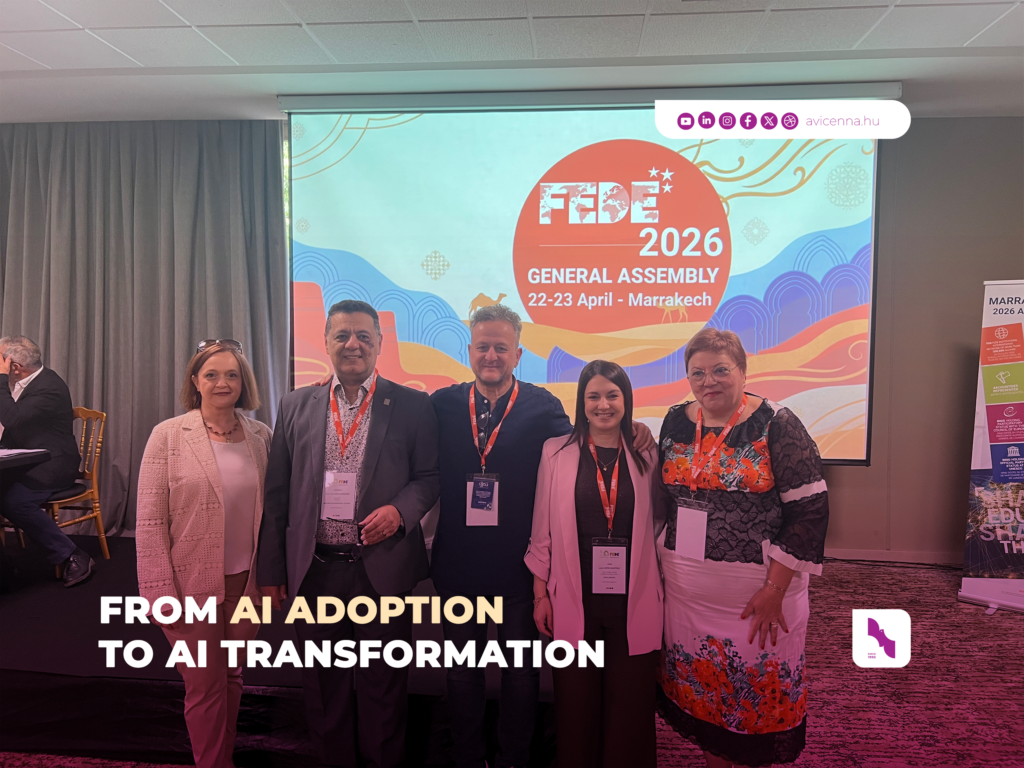
In April 2026, at the FEDE General Assembly in Marrakech, educational leaders from across the globe gathered to address a critical question: “How do we lead educational institutions in the age of AI?” I had the privilege of participating in a panel discussion on digital and technological transitions in education. The engaging discussions and exchange of ideas served to crystallize the concepts I have advocated for years during this critical era of rapid change in global education.
This article builds on that discussion and argues that the real challenge facing educational institutions today is not merely technological adoption, but a paradigm shift and institutional redesign. Drawing on the experience of Avicenna International College (AIC) and the implementation of our AIMES (Avicenna Intelligent Modular Education System) model, I propose a shift from fragmented AI usage toward a coherent, human-centered, and system-level integration of intelligent technologies.
Our experience at AIC suggests that the future of education will depend not on how quickly institutions adopt AI, but on how effectively they redesign themselves around it. It is imperative that we as educators, not technology, decide and define the future of education. AI and the forces driving its investment are immensely powerful, influencing almost every facet of our society, from industry and communication to politics, culture, and social dynamics.
Education is no exception. I believe it is high time for education specialists to stand up and guide this transformation, without fear or exclusion of AI. The alternative scenario is the absolute domination of AI companies and the subordination of education as both a science and a fundamental human need. The price of our inaction today will be paid by our children and generations to come.
In Marrakech this April, one message became increasingly clear across every session, every panel, and every hallway conversation: artificial intelligence in education is no longer a distant concept. It is already shaping how educational institutions function, evolve, and make decisions.
As President of AIC and Chair of FEDE’s AI in Education Committee, I have had the opportunity to witness this transformation from multiple vantage points, as an institutional leader navigating strategic decisions, as an educator rethinking pedagogy, and as a member of a global network of institutions all grappling with the same fundamental questions. The conversation at the General Assembly reflected a deeper shift that I believe is now underway across the entire education sector.
The question is no longer whether institutions should adopt AI. That debate is over. The question now is how they can do so meaningfully, responsibly, and with strategic coherence, in ways that genuinely serve students, teachers, and the broader educational mission rather than simply following trends or adopting technology for its own sake.
From Skepticism to Strategic Integration
I will be honest, my own relationship with AI in education has not always been what it is today. Some years ago, like many educators, I watched the unprecedented expansion of AI applications across all sectors with a mixture of curiosity and skepticism.
I questioned whether these tools could support genuine progress in education or if they simply represented another wave of educational technology hype that would eventually recede without leaving a lasting impact. Above all, I worried about the adverse effects of a rush toward automation and efficiency on human connection, critical thinking, and the irreplaceable role of teachers.
Alongside the evolution of the technology itself, however, my perspective has evolved. I have moved from cautious skepticism to a firm belief that AI, when used thoughtfully and integrated into the very DNA of education, can play a genuinely transformative role in preparing students for the future rather than the past. The world is changing rapidly, and education must evolve accordingly, placing AI at its core rather than treating it merely as an add-on tool.
This global transformation is already affecting the lives of our children and fundamentally altering what we teach and how we teach it. We are seeing the emergence of new professions that did not exist five years ago, many of which are now central to entire industries.
Meanwhile, other professions are disappearing, rendered obsolete by automation or redundant by shifts in how work is organized. This reality raises a fundamental question that I believe every educational leader must confront honestly: “Is education evolving with the same speed and depth as the world around it?”
We must admit that the answer is no. As educators and educational institutions, we are falling behind changes that are already well underway. We risk preparing students for a world that no longer exists, while the world they will actually enter continues to accelerate away from us. If we do not act, our education systems will become increasingly disconnected from the needs, realities, and aspirations of the next generation.
The Greatest Risk: AI Adoption Without Strategic Vision
Here is what I have observed across many institutions, including some within our own network: AI adoption is already happening, but it is happening in a vacuum.
Teachers are experimenting with tools, using platforms like ChatGPT to generate discussion prompts, testing AI grading assistants, and exploring adaptive learning software. Administrators are exploring automation for scheduling, institutional communications, and data analysis. Meanwhile, students are using AI independently, often more fluently than their instructors, to draft essays, solve complex problems, and generate presentations.
The core problem, however, is that these efforts are disconnected. There is no coherent vision tying them together. No overarching institutional strategy dictates what we should adopt, how we should implement it, or what outcomes we should expect.
Individual teachers are left to navigate the technology on their own. Departments operate in silos. At the same time, leadership remains uncertain about how to provide clear direction without stifling experimentation or risking the academic integrity of the institution.
This creates a critical gap between leadership and implementation, a gap that represents one of the greatest risks facing educational institutions today. Integrating AI into the DNA of an institution requires leadership to think holistically, balancing the complex educational, legal, financial, and structural implications of these new technologies.
Without a clear institutional vision and strategic framework, AI adoption inevitably leads to fragmentation. Tools proliferate, but they do not integrate. Practices shift, but they do not cohere. Most critically, there is no meaningful change in pedagogy, methodology, or the nature of learning itself. The surface changes, but the core remains untouched.
The result is what I call cosmetic innovation: the appearance of progress without the substance of transformation.

A Misconception: AI as a Tool
One of the most limiting misconceptions I encounter is treating AI as a tool to be implemented. This framing is the traditional way of addressing education and education technology. We have a curriculum, we have a teaching methodology, we have institutional processes and regulations, now we decide to add some AI tools to make things more efficient, effective or simply trendy.
This is a misconception that can harm our education system. AI is not simply an addition to existing technological systems. AI is a force that reshapes other systems. Once AI is in the education ecosystem of our institution, one way or another, it will force our education system to be redesigned and reshaped, sometimes we even do not notice the change.
When AI is approached as an add-on, institutions remain fundamentally reactive. Institutions respond reactively to each new AI tool. They willingly adopt each new tool, without ever looking deeper into the structure, capabilities, capacities, needs for change and the long term goals of the institution.
But if AI is understood as a system, as a set of capacities that can be incorporated into the DNA of education management, then institutions can act and progress with intention and plan. They can make strategic choices about what to preserve, what to change, and what to reimagine entirely.
Recognizing this distinction is the first step in moving from haphazard short-term experimentation toward principled long-term transformation.
The Core Misconception: AI as a Tool Rather than a System
One of the most limiting misconceptions I encounter in my discussions with academic leaders is treating AI simply as a tool to be implemented. This framing stems from a traditional, linear view of educational technology. Under this mindset, the process seems straightforward: we take our existing curriculum, teaching methodologies, and institutional processes, and then inject a few AI applications to make things more efficient, effective, or trendy.
This is a dangerous misjudgment. AI is not merely a digital upgrade to existing technological frameworks; it is a profound force that reshapes other systems. Once AI enters an institution’s ecosystem, it fundamentally alters it. If we do not guide this change, AI will force our educational structures to redesign themselves, sometimes without our conscious consent or awareness.
When AI is approached as an add-on, institutions remain fundamentally reactive. They scramble to respond to each new software update or application, adopting tools without ever evaluating their deeper impact on the long-term goals, capabilities, and underlying structures of the institution.
Conversely, when AI is understood as a system, a dynamic set of capabilities integrated directly into the core DNA of education management, institutions can act with intention and employ AI to advance their goals.
They shift from a defensive posture to a proactive one. Only then can educational leaders make deliberate, strategic choices about what to preserve, what to transform, and what to reimagine entirely. Recognizing this distinction is the essential first step in moving from haphazard, short-term experimentation toward principled, long-term transformation.
Lorem ipsum dolor sit amet, consectetur adipiscing elit. Ut elit tellus, luctus nec ullamcorper mattis, pulvinar dapibus leo.
A Necessary Shift: From AI Adoption to AI Transformation
At Avicenna International College, we have begun the gradual and steady integration of AI into the entire life of our institution. I strongly believe that to thrive, institutions must shift their fundamental perspective from “using AI tools” to “designing AI-incorporated ecosystems.”
Let me be precise about what this means in practice. The language of “transformation” can sometimes become vague or purely aspirational without concrete grounding. In our AIMES model at AIC, AI functions not as a goal in itself, but as a transformative catalyst to achieve better learning outcomes. These outcomes include:
- Stronger academic performance rooted in deep comprehension rather than surface-level knowledge.
- Enhanced creativity and collaboration as students tackle complex, open-ended challenges.
- More personalized, inclusive learning experiences tailored to individual student needs.
- Deeper engagement with real-world complexities that prepare students for the challenges they will face beyond the classroom.
AI cannot create these changes on its own, nor can it guarantee their success. However, an institution can achieve far better results when it embeds the architecture of AI, rather than just its standalone tools, into its structural flows and daily actions. At AIC, we have approached this systemic rethinking by addressing fundamental questions in four core areas:
- Learning structures: How content is organized, how time is allocated, and how student progression is designed.
- Decision-making processes: Who makes decisions, what information informs them, and what mechanisms are used.
- Institutional workflows: How tasks flow between people and systems, where automation adds value, and where human judgment remains essential.
- Organizational roles: What teachers do, what administrators manage, what students are responsible for, and how AI supports each of these stakeholders.
This represents a complete and lasting transformation, one that aligns an institution with the needs of the future rather than the past. At FEDE, we are striving to set a practical example of what this systemic transformation looks like in action.
Enlightened Leadership in the Age of AI
At the FEDE panel in Marrakech, one of the central questions posed to us concerned leadership: How can educational leaders develop sufficient mastery to steer, rather than be overtaken by, these technological transformations?
To answer this, we must first dismantle a damaging myth. It is neither realistic nor necessary for educational leaders to master every technical aspect of AI. The pace of development is simply too fast. Tools that are cutting-edge today will be obsolete in six months; techniques that seem revolutionary now will be standard practice by next year.
Attempting to achieve granular technical mastery is a distraction from the true work of leadership. What leaders must develop instead is a principled, consistent framework for understanding and engagement, specifically regarding the application of AI in education.
While every leader will develop their own approach, I recommend three core practices to anchor your strategy:
- Commit to continuous, active engagement: Avoid passive observation. Commit to the regular, hands-on use of AI tools. To steer your institution effectively, you must understand first-hand what these technologies can and cannot do.
- Filter signal from noise: Staying informed does not mean reading every article or watching every demo. It means relying on curated, high-quality sources, such as FEDE’s AI in Education Committee, that provide strategic clarity, and dedicating time each week to understanding broader trends.
- Cultivate collective intelligence: True leadership in the AI era is not about being the most knowledgeable person in the room. It is about creating an institutional culture where teams are encouraged to learn, experiment, and collaborate openly. Leaders must foster an environment where trial is valued, failure is treated as a learning opportunity, and knowledge is shared freely.
Ultimately, leadership in the age of AI is not about knowing everything. It is about guiding your institution with clarity, discipline, and strategic vision, setting a course and maintaining it even as the technological landscape continues to shift beneath us.
AI, Equity, and Responsible Design
Another critical dimension that surfaced repeatedly at the FEDE panel in Marrakech is equity. By default, AI systems reflect the biases, limitations, and exclusions of their training data. If that data underrepresents certain languages, cultures, or perspectives, the AI will inevitably reproduce and amplify those gaps.
This is not a theoretical concern. It has immediate, real-world consequences for students whose experiences, identities, and voices risk being marginalized or erased by technologies designed without them in mind. Democracy, human rights, and equity are at the very heart of FEDE’s core values, and we must treat them with the urgency they deserve.
At Avicenna International College, we have embedded equity as a foundational principle in our program design and systemic integration of AI.
For example, within our MBA program in International Student Counseling and Recruitment Strategy, we have introduced a structured framework for integrating inclusivity and cultural awareness directly into AI-supported learning environments. This is not an optional add-on or a single standalone module on diversity; it is woven into the architecture of the entire program.
We provide our instructors with practical, actionable tools, including specialized prompt libraries and pedagogical task frameworks that enable them to systematically evaluate learning content for equity gaps and generate activities that actively center diverse perspectives.
Through targeted methodologies and structured prompt design, equity becomes a built-in feature of how AI is utilized, rather than an afterthought addressed only when a concern arises.
This approach requires intentionality and continuous, dedicated effort. However, it is the only way we can ensure that AI in education serves all students equitably, rather than just those whose backgrounds happen to align with the dominant patterns of global training data.
Change Management: Turning Challenge into Capability
One of the questions from the Marrakech panel that struck me as particularly insightful was this: How can all teams be brought on board without leaving anyone behind?
This question gets to the very heart of institutional transformation. We must understand that an AI-driven transformation is not primarily a technical challenge; it is a human one. Educators approach AI with a wide spectrum of emotions and attitudes, ranging from excitement to deep concern.
In either case, the introduction of AI presents a real test for educational institutions, often leading to frustration and misunderstanding. Many teachers worry about being replaced by automated agents, an anxiety amplified by global news, such as the emergence of Europe’s first “teacherless” AI classrooms.
However, AI does not just create challenges; it also provides the tools to manage the very changes it brings, provided we are intentional about how we design our learning experiences around it.
In our programs at AIC, we train both educators and learners to use AI tools within leadership, communication, and change management processes. We focus on real-world conditions rather than teaching AI as a set of abstract principles or disconnected applications.
Students learn change management principles by applying AI to support those principles in practice. They work on realistic scenarios where they must simultaneously navigate human resistance, organizational complexity, and technological implementation.
For example, students might be tasked with managing the rollout of an AI-driven admissions system in a university where administrative staff are concerned about job security and cultural change. To succeed, they must develop communication strategies, address ethical concerns, build stakeholder buy-in, and use AI tools to support each dimension of the project.
This dual approach is essential for the next generation of educational leaders. The lesson is clear: AI should not be viewed merely as a disruptive force to which we must react defensively. It should be understood as a proactive capability we can use to guide transformation, including the very transformation that AI itself is generating.
Avicenna International College: A System-Level Model (AIMES)
Let me now turn to the practical example that grounds the concepts I have discussed: the strategic framework we are actively building at Avicenna International College. We have approached institutional transformation at the system level through what we call the AIMES framework—the Avicenna Intelligent Modular Education System.
It is important to emphasize that AIMES is not a technology platform. Rather, it is a comprehensive, institutional model for redesigning an educational organization into a human-centered, AI-integrated learning environment.
The AIMES framework is built upon three foundational principles:
1. Human-Centered Design
Technology must enhance learning, but it should never replace the human relationships that make education meaningful. In practice, this means that every design decision, from course architecture to evaluation methodologies, is driven by human educators to serve students’ growth as whole human beings. Strategic decisions are made by leaders and teachers, informed by AI as a cognitive partner. Only then is technology introduced to support those goals.
Under this model, teachers remain at the very center of the educational experience. They cannot and should not be displaced. Instead, they are empowered by AI to focus on the work that only humans can do: mentoring, relationship-building, responding to individual needs, and making judgment calls based on a deep understanding of their students. Human-to-human interaction remains the essence of education in the AIME model.
2. Mentorship-Based Learning
In the AIMES model, teachers function primarily as mentors rather than mere deliverers of content. In the modern age, content can be accessed through digital resources, asynchronous modules, and AI-driven platforms. What students cannot get from those resources, however, is strategic guidance in critical thinking, decision-making, and personal growth, the kind of support that requires ongoing mutual trust and professional judgment.
AI, however, frees teachers from repetitive administrative and content-delivery tasks, enabling them to focus their expertise and time where it matters most: helping students learn how to think, how to navigate complexity, and how to develop as both learners and independent individuals.
3. Integrated System Design
This is the principle that most clearly distinguishes system-level transformation from tool-level adoption. Within the AIMES framework, AI is embedded thoughtfully across the entire educational ecosystem. Under the careful direction of our teachers, AI supports curriculum design, learning delivery, assessment, feedback mechanisms, administrative workflows, data analysis, and decision-making processes.
This deep integration ensures true coherence. Every part of our operational system is designed with AI in mind, and every part of our technological infrastructure is designed to support our broader educational mission. The result is not just heightened efficiency, but complete institutional alignment. Students experience learning as a unified, coherent whole rather than a fragmented collection of disconnected tools.
By anchoring AI in these three principles, institutions can move beyond isolated, trial-and-error experimentation and achieve true, lasting transformation.
A Practical Framework: Three Levels of AI Maturity
In my conversations with educational leaders across the world, I have found it useful to think about institutional progress across three distinct stages of AI maturity:
Level 1: Awareness
- Focus: Understanding what AI is and exploring its potential.
- Characteristics: Institutions at this stage are learning, exploring, and experimenting. They may have a few pilot projects, early adopters among the faculty, or introductory professional development sessions. However, AI is not yet integrated into core processes or strategic planning.
Level 2: Integration
- Focus: Applying AI tools within selected processes and workflows.
- Characteristics: Institutions at this level have moved beyond pure experimentation to implementation. They use AI for specific tasks such as admissions screening, evaluation support, or data analytics. However, these applications remain siloed. There is no overarching vision connecting them, and no systemic redesign of the institution based on what AI makes possible.
Level 3: Transformation
- Focus: Redesigning the institution as a fully integrated, AI-enabled ecosystem.
- Characteristics: Institutions at this level have rethought and redesigned their fundamental operating model with AI as a core structural component. Here, AI is not an add-on; it is woven into how the institution functions at every level. The strategic focus shifts from “what tools should we use” to “what kind of institution should we be.”
Most institutions I encounter are currently positioned somewhere between Levels 1 and 2. Many are doing excellent work at Level 2, implementing AI in targeted ways that create genuine value. However, the true, transformative potential of AI in education will only be realized when we reach Level 3. That is the level we are actively working toward at Avicenna International College.
Conclusion: Designing the Future of Education
Artificial Intelligence is already shaping the future of education; that reality is undeniable. The question facing educational institutions is not whether to engage with AI, that question has already been answered by the immediate realities of our classrooms, administrative offices, and our students’ lives.
The true question is whether institutions will proactively redesign themselves around AI, or whether they will simply layer new tools onto outdated structures and hope for the best.
The future will not belong to those who adopt AI the fastest, who collect the most tools, or who claim the most novel technical features. Rather, the future will belong to those who:
- Think systemically: Understanding AI not as a collection of applications, but as a transformative force that requires institutional redesign.
- Act intentionally: Making strategic choices about where and how AI should be integrated based on clear educational values and human-centered goals.
- Lead responsibly: Ensuring that AI serves equity, enhances rather than replaces human relationships, and prepares students for a future we can only partially anticipate.
I do not believe that AI will replace educational institutions. Mentoring, relationship-building, and cultivating judgment and character remain deeply human endeavors that cannot be automated or replaced by algorithms. However, those institutions that redesign themselves around AI, integrating it thoughtfully into every dimension of their work to enhance rather than diminish human connection, will ultimately replace the institutions that fail to adapt.
A Final Thought
At FEDE and AIC, our mission remains clear:
“To build a learning environment where human intelligence and artificial intelligence work together; where education is active, guided, meaningful, and result-oriented; and where the future is not only anticipated, but intentionally designed.”
This is the work ahead of us, not just for a single institution, but for a global community of educators committed to ensuring that AI serves the highest goals of education. The path forward will be challenging, but it is the most vital work we can do today.
04th May 2026
By Dr. Shahrokh MirzaHosseini
President, Avicenna International College
Board Member of the FEDE Steering Committee
Chair of the FEDE Artificial Intelligence in Education Committee
Further References
Giannini, S. (2025). AI and the future of education: Disruptions, dilemmas and directions. UNESCO.
AIC Showcases AI Innovation at FEDE General Assembly 2026
Dr. Shahrokh MirzaHosseini Appointed as Chair of FEDE AI in Education Committee